The Mistake That Nearly Killed My Favorite Plant and What It Taught Me
One year ago, on a soft spring morning, the sun feels gentle and the air smells like fresh rain. I had just bought a beautiful string of pearls plant, one I’d wanted for months. Its tiny green beads hung down like jewelry, catching the light that filtered through my kitchen window. It instantly became my favorite.
Every morning, I would check on it first. I misted it carefully, turned it toward the light, and whispered small words of encouragement like some proud new parent. I thought I was doing everything right. But what I didn’t realize was that I was slowly loving it to death.
Two weeks later, I began to notice something wrong. The pearls that once looked plump and glossy started to shrivel. The vines looked thinner. At first, I told myself it was just adjusting that maybe it needed a little extra water. So I gave it more. Then more again.
It wasn’t long before the soil felt heavy and wet, but I didn’t understand what was happening. By the time I checked the roots, it was too late. They had begun to rot.
The Moment I Realized My Mistake
I remember holding that little pot in my hands, feeling a wave of guilt wash over me. I had been so eager to care for it that I never stopped to listen to what it truly needed.
That was the moment I realized something bigger that sometimes, in life and in gardening, we harm what we love most by not giving it space to breathe.
It wasn’t neglect that killed my plant. It was my inability to let go.
So I took a deep breath, cut away the rotting parts, and repotted what was left into fresh, dry soil. I placed it in a brighter spot, stepped back, and told myself not to interfere so much.

Weeks of Quiet Waiting
The next few weeks were hard. Every day, I wanted to check the soil or give a little water, but I held back. I learned to watch instead.
Days passed, then a week, then two. Nothing seemed to change. The plant sat there quietly, as if deciding whether to forgive me.
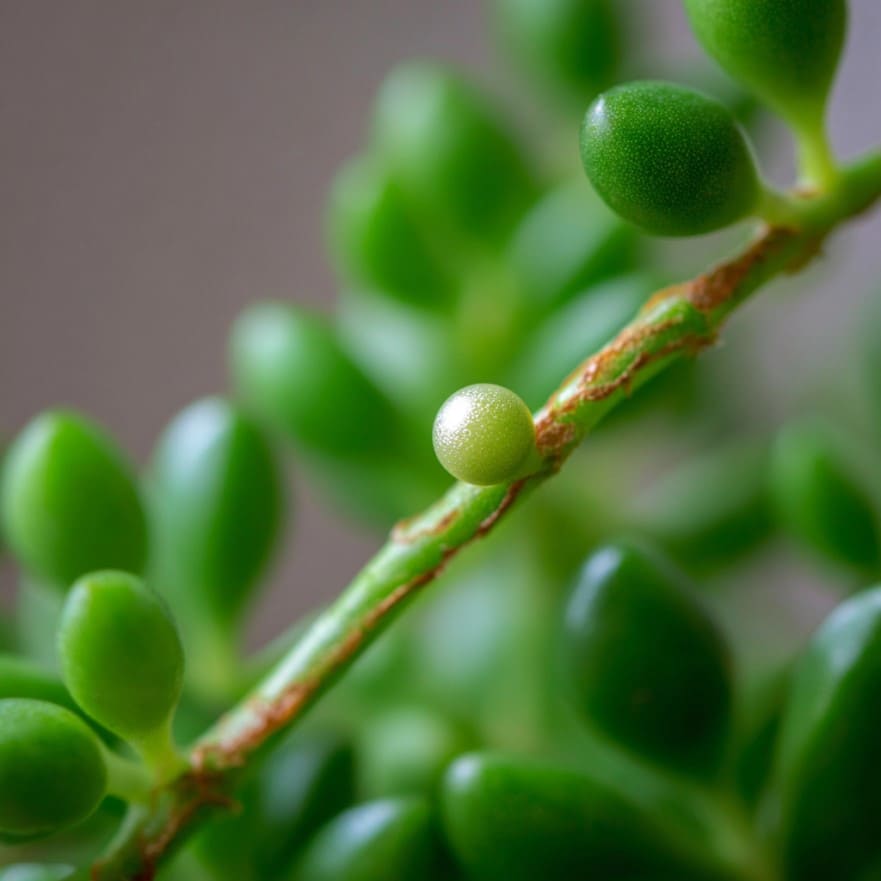
And then one morning, I saw a tiny green bead, fresh and full, sprouting from one of the cut stems. I remember smiling through tears. It wasn’t much, but it was enough. Enough to remind me that nature forgives, as long as we learn.
What It Taught Me About Gardening
That little plant taught me more than any gardening book ever could. It taught me that care doesn’t always mean control.
Plants, like people, need balance like water and air, nurture and rest, attention and distance. Overwatering is one of the most common mistakes gardeners make, and I had fallen right into that trap.
Most houseplants, especially succulents, prefer to dry out between waterings. Their roots need oxygen as much as they need moisture. Too much water suffocates them, while a brief dry spell often helps them grow stronger.
Now, before I water any plant, I always check the soil with my fingers. If it feels cool and damp beneath the surface, I wait. I let the plant speak first. That habit has changed the way I garden. It’s slower, gentler, and far more peaceful.

It Also Taught Me About Life
Some lessons from the garden have nothing to do with soil at all. This one was about love and how sometimes love means stepping back.
I realized that I had a pattern of doing the same thing outside of gardening too. When people I care about struggle, my instinct is to fix things, to step in and help even when they just need space. I pour myself into situations that really just need air.
That wilted plant became a mirror. It showed me the cost of holding on too tightly, of giving when what’s needed is patience.
It reminded me that growth happens in the quiet moments — the ones we can’t rush. The same way roots repair themselves in darkness, our hearts also heal in stillness.
Learning to Listen to the Garden
Now when I walk through my garden, I try to listen instead of manage. I notice how the marigolds lean toward the morning light, how the basil perks up after rain, how the soil smells different after a few hot days.
Gardening has become less about control and more about relationship. Each plant has its own rhythm, its own little personality. Some thrive in full sun; others prefer shade and quiet corners. Once you start noticing these differences, you realize that every plant like every person has a story.
The Plant That Refused to Give Up
Months have passed since that near disaster, and my string of pearls now trails gracefully again along the kitchen window. It’s not as full as it once was, but it’s stronger. The vines are thicker, the pearls glossier, and I like to think it carries a little resilience, a quiet story of survival.
Every time I look at it, I remember that mistakes don’t mean failure. Sometimes they’re just reminders to slow down, pay attention, and listen more carefully.
Closing Thoughts
Today, my garden is full of little survivors, plants that were once yellowed, drooping, or half-forgotten. Each one tells a story of patience and second chances.
And maybe that’s what gardening really is: a practice in forgiveness, a slow dance with time. It’s learning to give what’s needed, not what’s easy.