Here’re 6 Surprising Ways Cardboard Has Helped My Garden Thrive
Cardboard isn’t the first thing most people think of when it comes to gardening. Many beginners imagine compost, mulch, tools, and fertilizers, but the stacks of boxes arriving from deliveries rarely enter the conversation.
For a long time, I didn’t think much of cardboard either. I recycled it the moment a package arrived, never stopping to wonder if it could serve a second purpose.
That changed the year I decided to expand the back garden. The ground was covered with stubborn weeds and patches of grass that had dug their roots deep into the soil. Digging it all out felt impossible, especially after work when my energy was already fading.
One afternoon, while breaking down a shipping box to toss into the recycling bin, I suddenly remembered a gardener from our neighborhood who once mentioned using cardboard to prepare new beds. I never asked for more details at the time, but I decided to try it myself.
Using Cardboard to Build New Garden Beds
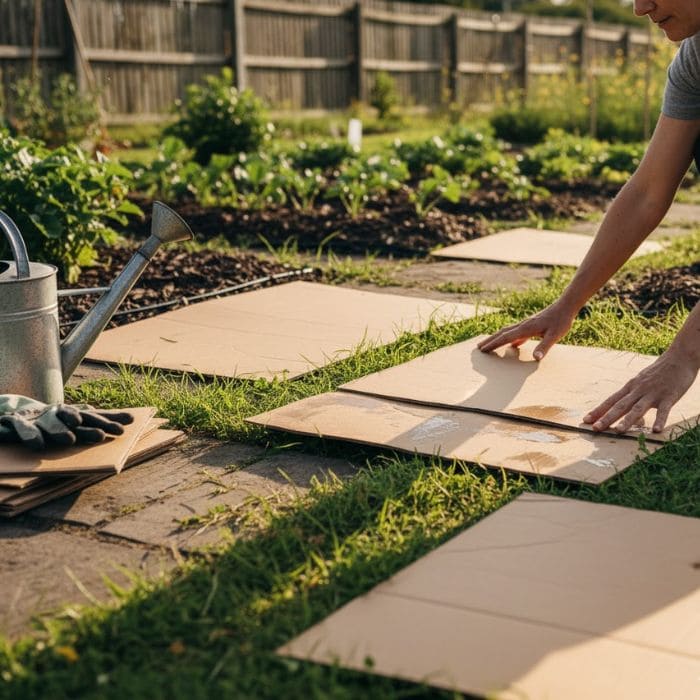
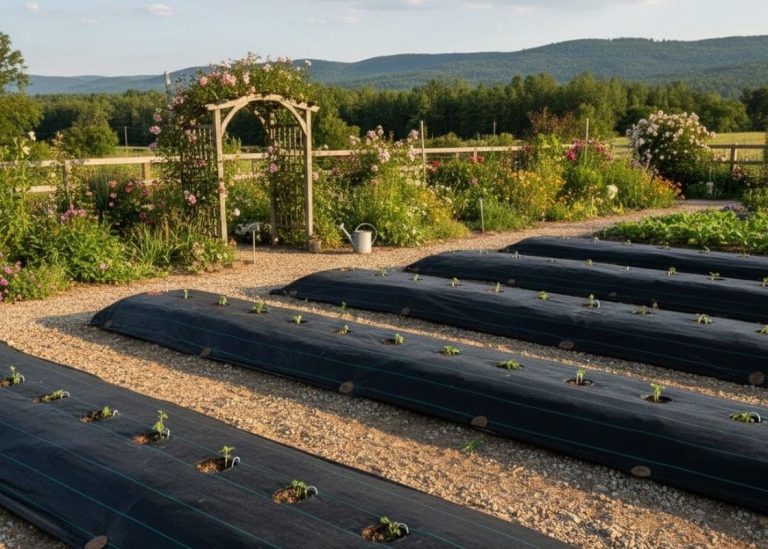
The first time I used cardboard for bed-building was the moment I realized how powerful it can be. I laid large pieces directly on top of the grass in the area I wanted to convert.
The seams overlapped slightly so no sunlight could sneak through. Once everything was covered, I added a thick layer of compost followed by mulch.
Over the next few months, the cardboard slowly softened and broke down. Grass and weeds beneath it suffocated naturally, and the soil microorganisms began pulling the material downward as they worked.
When spring arrived, the bed was fully transformed – loose soil on top, and no trace of the grass that once made digging so difficult. This method saved hours of digging and spared my back from unnecessary strain. To this day, it’s my favorite way to start a new bed.
A Natural Weed Barrier for Existing Beds
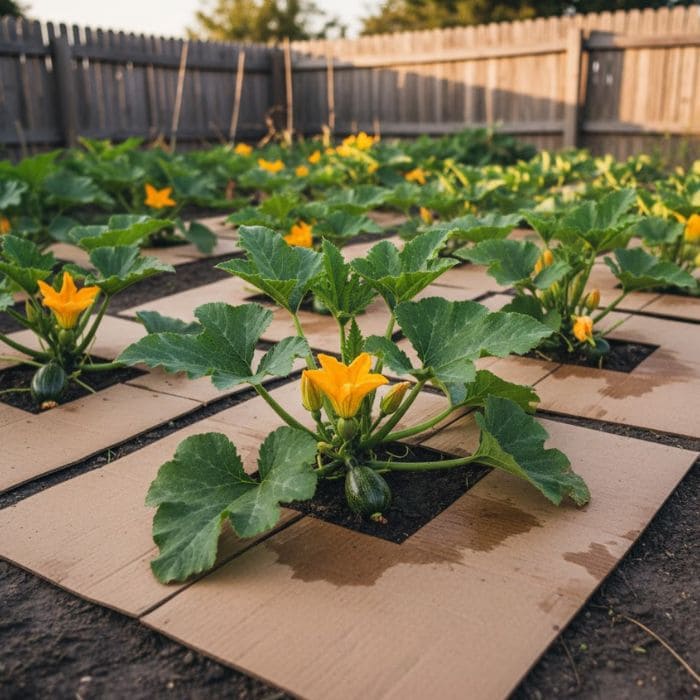
There are seasons when the weeds seem to grow faster than the plants I actually care about. Instead of letting frustration get the best of me, I often tuck pieces of cardboard beneath a layer of mulch around heavier feeders like tomatoes or squash.
This slows weed growth dramatically, but the part I appreciate most is how much moisture the soil retains afterward. Cardboard acts as a temporary shield that prevents the sun from pulling water away too quickly.
On hot days, this difference can be felt with just a touch of the soil. While areas without cardboard dry out quickly, sections protected beneath it stay cool and slightly moist.
The cardboard eventually breaks down, which means the soil receives another small dose of organic matter without adding anything synthetic.
A Protective Pathway Material
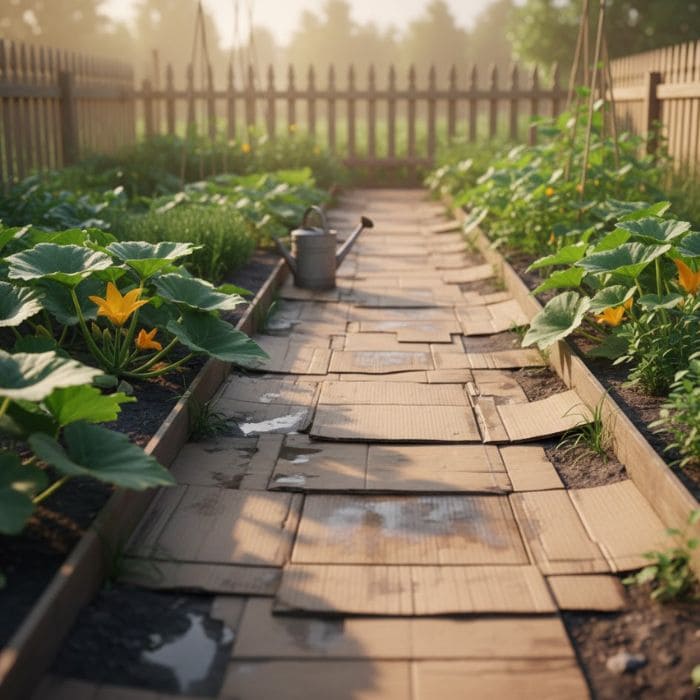
Cardboard has also helped me create simple garden pathways that keep mud under control. When a wet season arrives, the soil becomes sticky and clings to every shoe.
Laying cardboard on the ground, then adding wood chips on top, creates a stable surface that lasts long enough for a growing season. It’s not a permanent walkway, but it works incredibly well when I need something quick and inexpensive.
The pathway also blocks weed growth in high-traffic spots, and when it finally softens and begins to merge into the soil, I simply add new layers. Instead of fighting messy paths every winter, I now have a system I can refresh within minutes.
A Gentle Insulator for Young Plants
In early spring, when nights still feel colder than expected, I sometimes use cardboard to create simple shields around tender seedlings.
A curved piece placed on the windward side of a plant protects it from harsh drafts. When positioned like a small, temporary wall, cardboard also slows heat loss from the soil.
This isn’t meant to replace proper frost cloth, but it helps during those borderline nights when the temperature dips just slightly below what young plants prefer. The next morning, the seedlings often look noticeably less stressed.
Composting With Cardboard
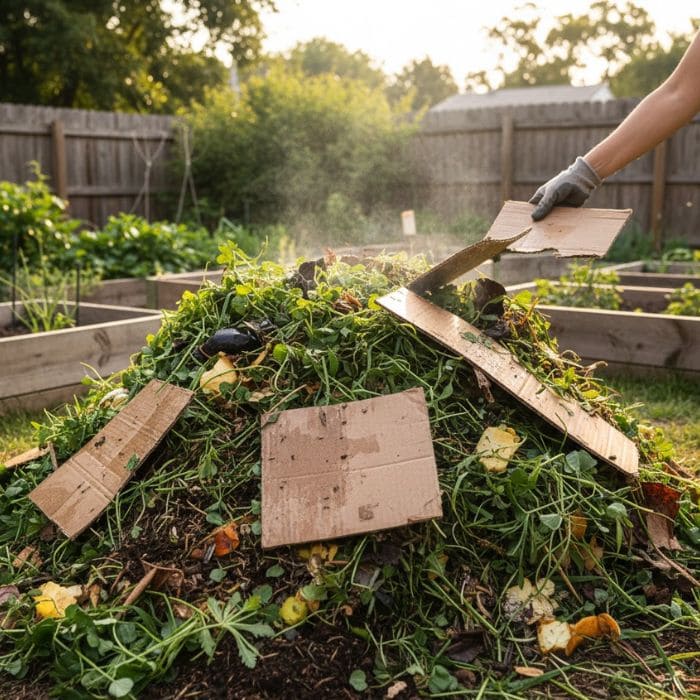
Cardboard breaks down well, especially when shredded or torn into smaller pieces. I sometimes mix strips of cardboard into my compost pile to balance out the kitchen scraps and plant clippings.
It absorbs excess moisture and gives the pile more structure, which helps air pockets form. Those pockets keep the compost from turning soggy and slow.
Over time, the cardboard disappears entirely, becoming part of the dark, crumbly compost I spread across the beds. It’s satisfying to watch a product most people throw away return to the garden in a form that supports new life.
Storing Tools and Protecting Surfaces
Cardboard even helps outside the garden beds themselves. I keep a few pieces in the garage to place under pots when repotting plants. Soil spills stay contained, and cleanup becomes easy.
If I’m painting wooden planters or staining trellises, cardboard protects the ground far better than old newspapers ever did. It’s such a simple thing, but it makes the work feel more organized and less stressful.