Follow My Best Soil Mix and See Beautiful Orchids
Orchids look delicate, but the truth is they are more stubborn than most plants I grow. When I first brought home a few orchids, I assumed I could treat them like any other houseplant.
I watered them the way I watered my herbs, used regular potting soil once, and kept them inside near a sunny window. Nothing worked. The leaves became soft, the roots rotted, and not a single plant bloomed again after their first purchased flowers dropped.
For a long time, I thought orchids simply didn’t like me. But looking back, the problem was never the plant, it was the way I cared for them.
I didn’t understand what orchids need, especially their roots. That was the turning point. Once I stopped treating orchids like indoor plants and started treating them like the epiphytic plants they are (plants that cling to trees in nature), everything changed.
What Finally Helped Me Understand Orchid Roots

In their natural environment, orchids don’t sit in soil. They grow on trees, with roots exposed to fresh air and quick-moving moisture.
When I learned that, the mistakes I had made suddenly made sense. My old mixes were too tight, too dense, and too wet. Their roots never dried properly, which caused rot and stress.
I spent a lot of time searching, reading, asking other gardeners, and experimenting. Eventually, after several failed attempts, I found a mix that completely transformed the way my orchids grew.
The roots finally looked strong, the leaves became firmer, and for the first time in years, I saw signs of new flower spikes.
My Orchid Soil Mix That Finally Worked

I used:
- 60% large bark chunks
- 20% perlite
- 20% sphagnum moss
This ratio provides exactly what orchid roots need: airflow, light moisture, and quick drainage. I see:
Large bark chunks (60%)
They create air pockets so the roots can breathe. Orchids need this more than anything else. The bark also dries faster, which prevents root rot. I choose pieces at least the size of a thumbnail, anything too small holds too much water.
Perlite (20%)
Perlite keeps the mix light and prevents compacting. It helps water flow through quickly without making the mix too dry. It also keeps the bark from sticking together in wet weather.
Sphagnum moss (20%)
Moss holds a gentle amount of moisture around the roots without soaking them. This little bit of moisture is important, especially during hot Chicago summers when the wind dries things fast. I mix the moss evenly so no area stays too wet.
Besides, I adjust the moisture level by squeezing a small amount of moss before adding it. If the weather is humid, I use less. If the air is dry, I keep the full amount. This mix is flexible and never suffocates the roots.
I Also Started Hanging My Orchids on the Front Porch
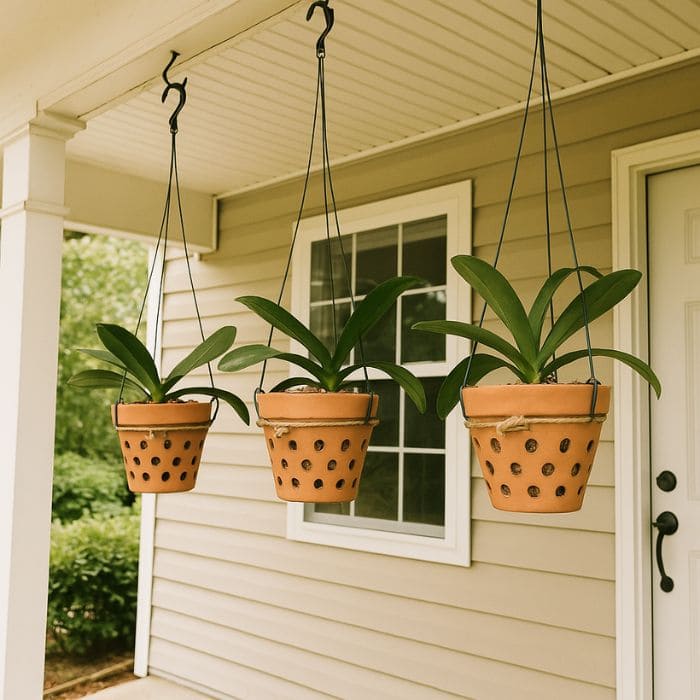
Understanding their need for airflow, I stopped keeping orchids indoors. My porch became their new home. It faces east, so the orchids get bright morning sun and gentle light for the rest of the day.
Plus, the porch has open sides, so the air flows constantly, drying the roots between waterings and keeping the environment similar to how orchids grow in nature.
Of course, the difference was immediate. The leaves became firmer. The roots started turning bright green after watering. The entire plant looked more alive.
Hanging them also keeps them away from heavy rain. Too much water at once can stress orchids, so having them sheltered but still outdoors is the perfect balance.
My Watering Routine and Here’s My Secret
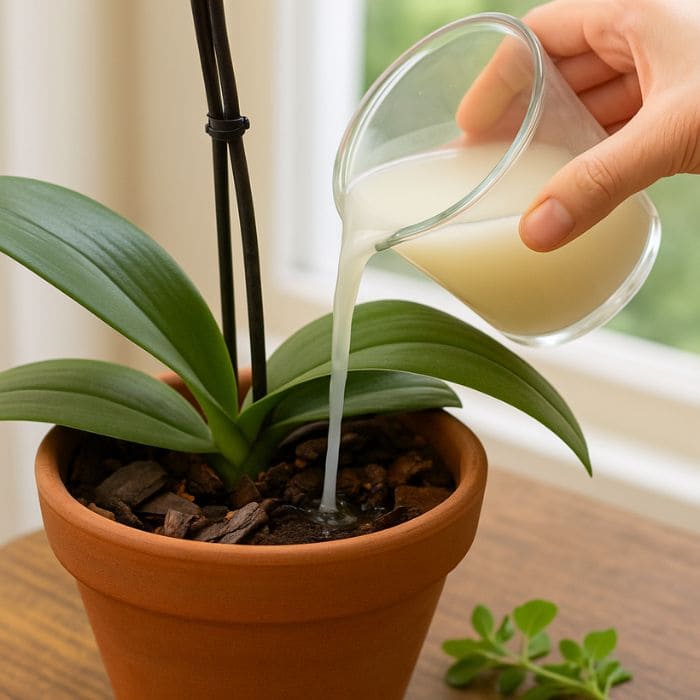
I water orchids once a week in the warmer months and once every 10-14 days in cooler months. The bark dries fast outside, so this rhythm keeps the moisture steady.
I water until the mix is fully soaked and then let it drain completely. I never leave water in the saucer because standing water suffocates the roots.
Every two or three weeks, I use diluted rice water. Rice water contains small amounts of nutrients and beneficial bacteria that help strengthen roots. I always dilute it so it doesn’t ferment or become too heavy.
How I prepare rice water for orchids:
- I rinse rice once, then use the second rinse as the nutrient water.
- I dilute it by mixing one part rice water with two parts clean water.
- I use it immediately and never store it, since old rice water can sour.
My orchids responded better than I expected. The leaves grew smoother, and the roots appeared brighter and thicker.
The Blooming That Finally Happened

Last year, after almost giving up on my orchids, I saw something I had been waiting for – new flower spikes.
The first one showed up in late summer, a tiny green tip pushing upward from the base of the plant. A few weeks later, another appeared. For a gardener who had tried so many times and failed, it felt like a small victory.
The blooms stayed open for weeks. They looked healthier and richer in color than the blooms the orchids came with when I bought them. Seeing them hang on the porch, moving gently in the breeze, reminded me how important it is to give a plant what it needs, not what we assume it wants.