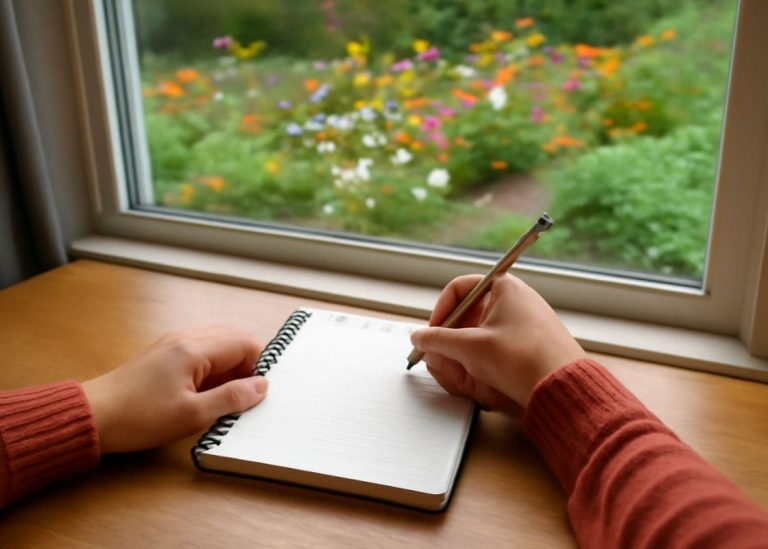
18 Herb Garden Ideas That Fit Small Spaces
Herb garden ideas that fit small spaces can make it possible to grow fresh herbs even when you only have a balcony, a windowsill, or a small corner at home.
Have you ever wanted to grow herbs but felt like you simply did not have enough room? The truth is, space is rarely the real limitation. Most of the time, the issue comes from how the space is used.
After trying different setups in small areas, it becomes clear that herbs do not need much room to grow well. What they need is a layout that gives them enough light, proper drainage, and easy access for care.
In this guide, you will find practical herb garden ideas that work in real life, along with simple ways to set them up without overcomplicating things.
Why Herbs Are Perfect for Small Spaces
Herbs are one of the easiest types of plants to grow in limited areas.
Most herbs have compact root systems, which means they do not require large containers. They also grow quickly, so you can see results without waiting too long. This makes them ideal for beginners or anyone working with a small space.
Another advantage is flexibility. Herbs can grow in containers, hanging planters, vertical systems, or even recycled materials. This allows you to adapt your setup based on what you already have.
What Makes a Small Herb Garden Actually Work
A small herb garden works when it supports consistent growth without becoming difficult to maintain.
Light is the most important factor. Most herbs need several hours of bright light each day. Without enough light, growth becomes weak and uneven.
Drainage is equally important. Herbs do not like sitting in water, so containers must allow excess moisture to escape.
Access also matters more than people expect. If watering and harvesting feel inconvenient, the garden quickly becomes neglected.
Best Herb Garden Ideas That Fit Small Spaces
1. Windowsill Herb Garden (The Simplest Starting Point)
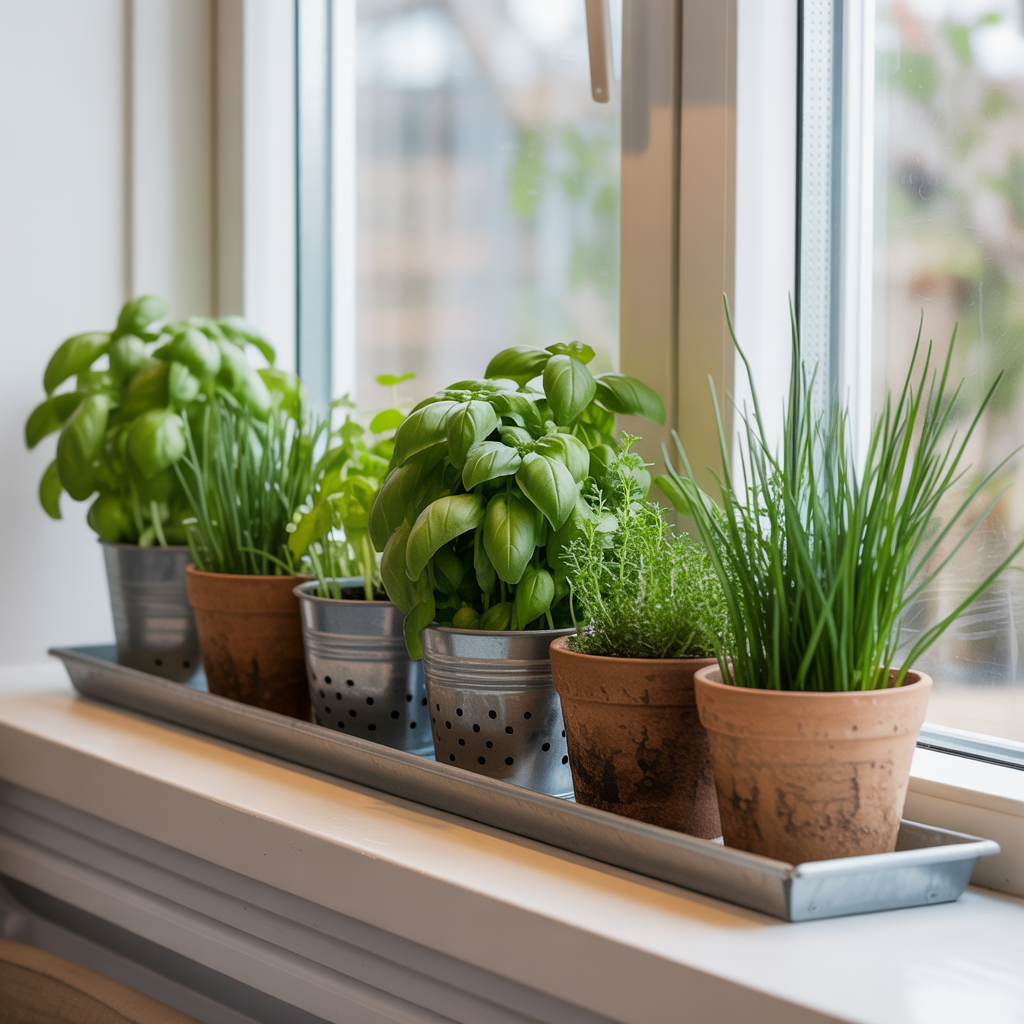
A windowsill is often the easiest place to start. Placing small containers along a bright window provides enough light for most herbs.
This setup requires no additional structure and keeps everything within easy reach.
Use pots with drainage holes and place a tray underneath to catch excess water. Herbs like basil, parsley, and chives grow well in this environment.
This setup works best when the window receives consistent light throughout the day.
2. Vertical Herb Garden for Limited Floor Space
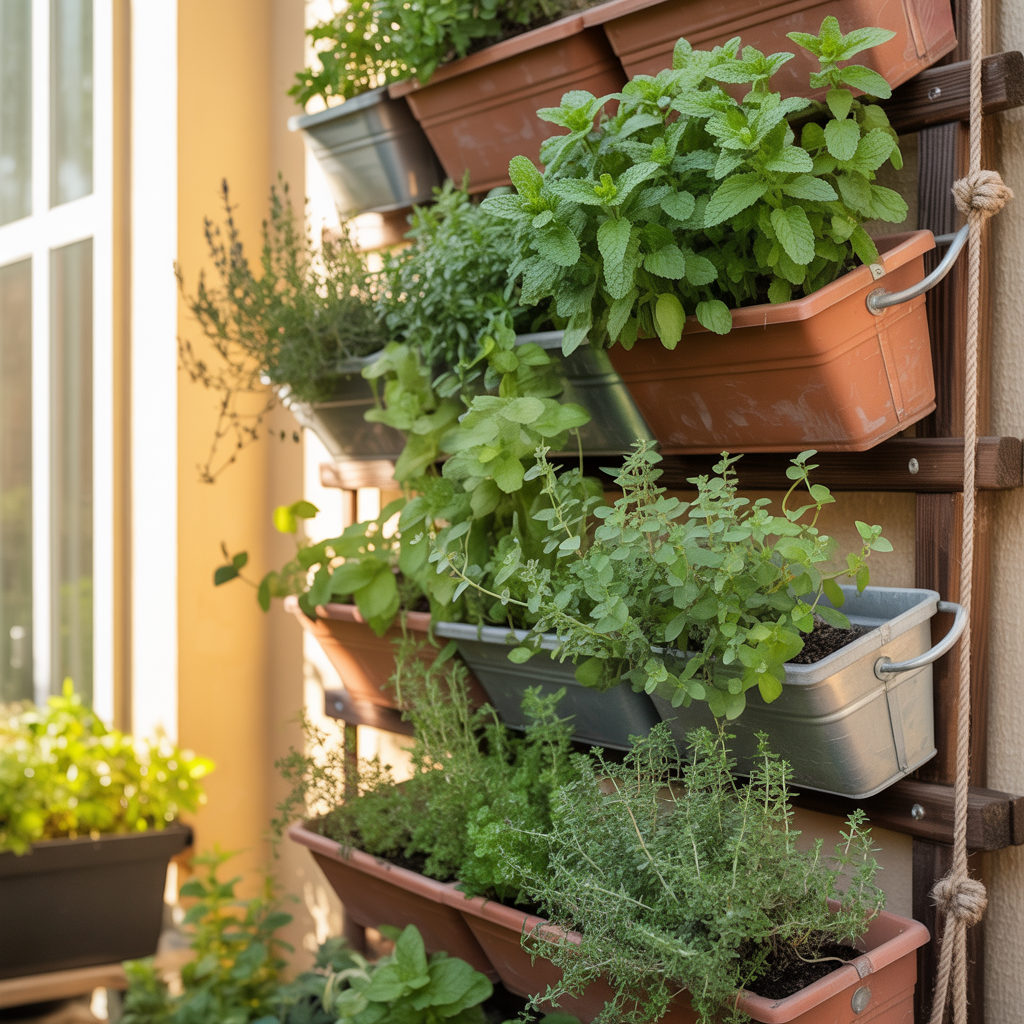
When space is tight, growing upward becomes the best option.
A vertical herb garden uses shelves, wall-mounted planters, or stacked containers to hold multiple plants without using floor space. This keeps the area organized while increasing capacity.
This idea is especially useful for balconies or small patios. It also connects well with small balcony garden layout ideas that actually work, where vertical space is often underused.
Herbs such as mint, oregano, and thyme adapt well to vertical systems.
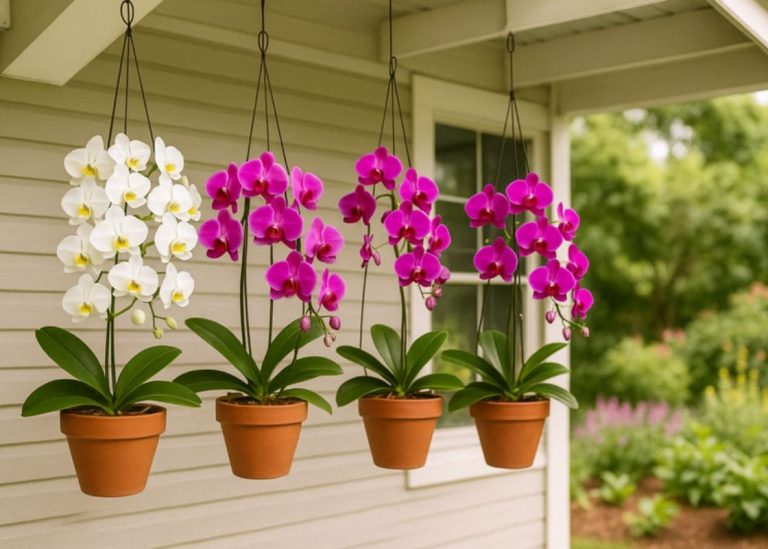
3. Hanging Herb Garden (Light and Airflow Advantage)
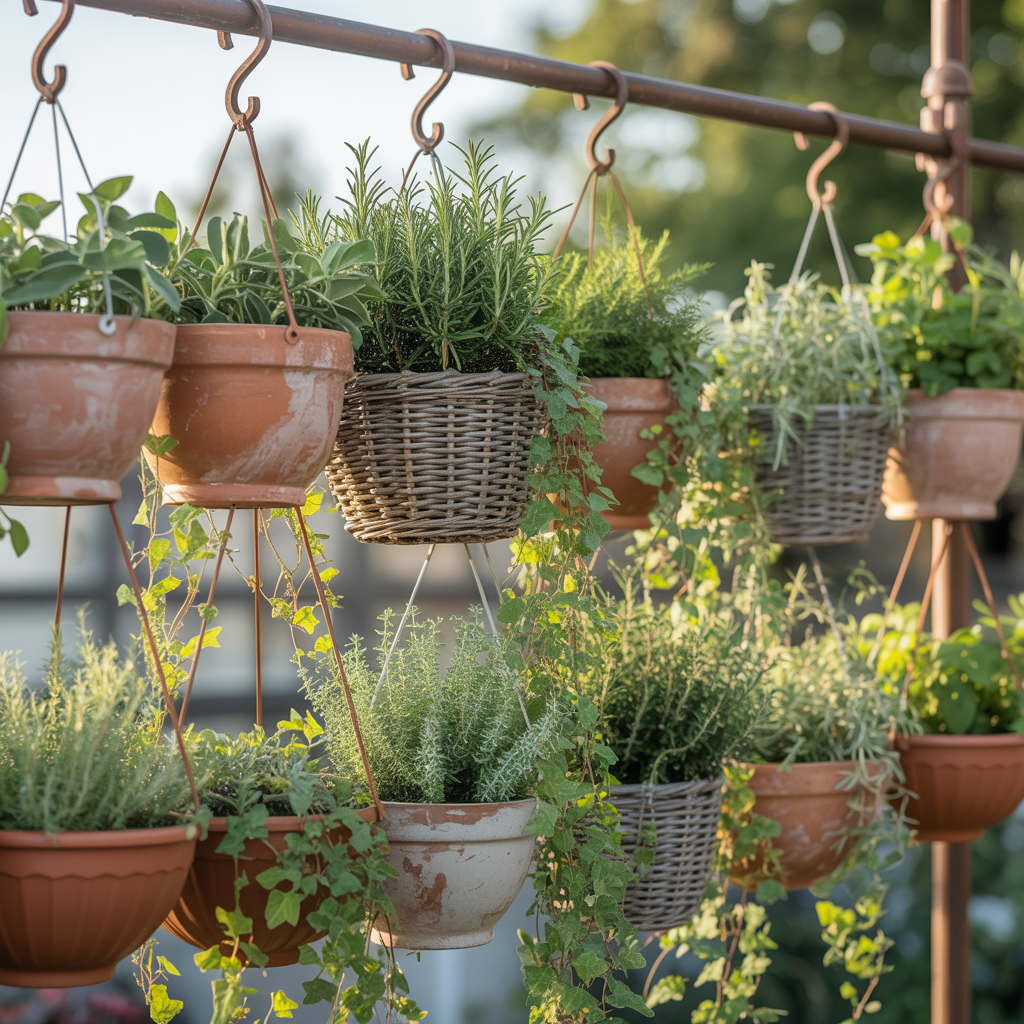
Hanging planters allow herbs to receive light from multiple directions.
By suspending containers from hooks or rails, you create space below while improving airflow around the plants. This helps prevent moisture buildup and supports healthier growth.
This setup works well for trailing herbs or lightweight containers. It also adds a natural, layered look without making the space feel crowded.
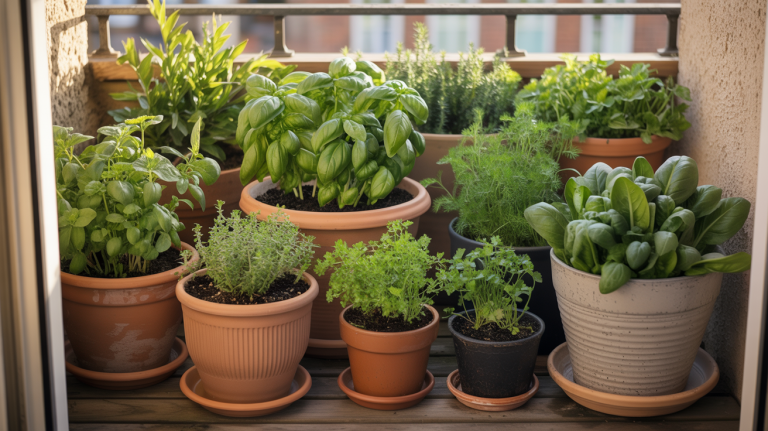
4. Compact Container Cluster (Flexible and Easy to Adjust)
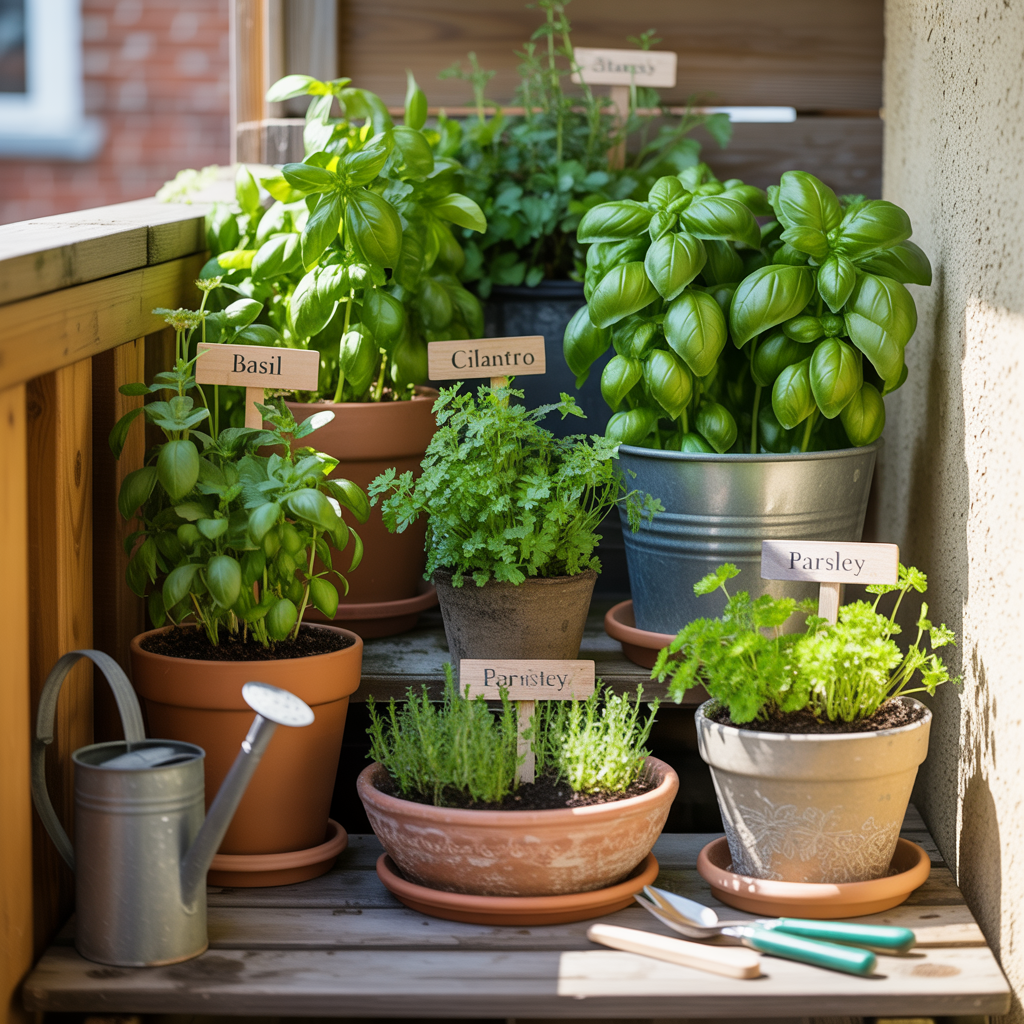
A container cluster groups several small pots together in one area.
Instead of spreading plants across the space, they are arranged in a structured group. This makes watering and maintenance easier.
Containers can be moved as needed, which allows you to adjust light exposure throughout the day.
This approach works well for beginners because it offers flexibility without requiring a fixed layout.
5. Railing Herb Garden (Maximize Edge Space)
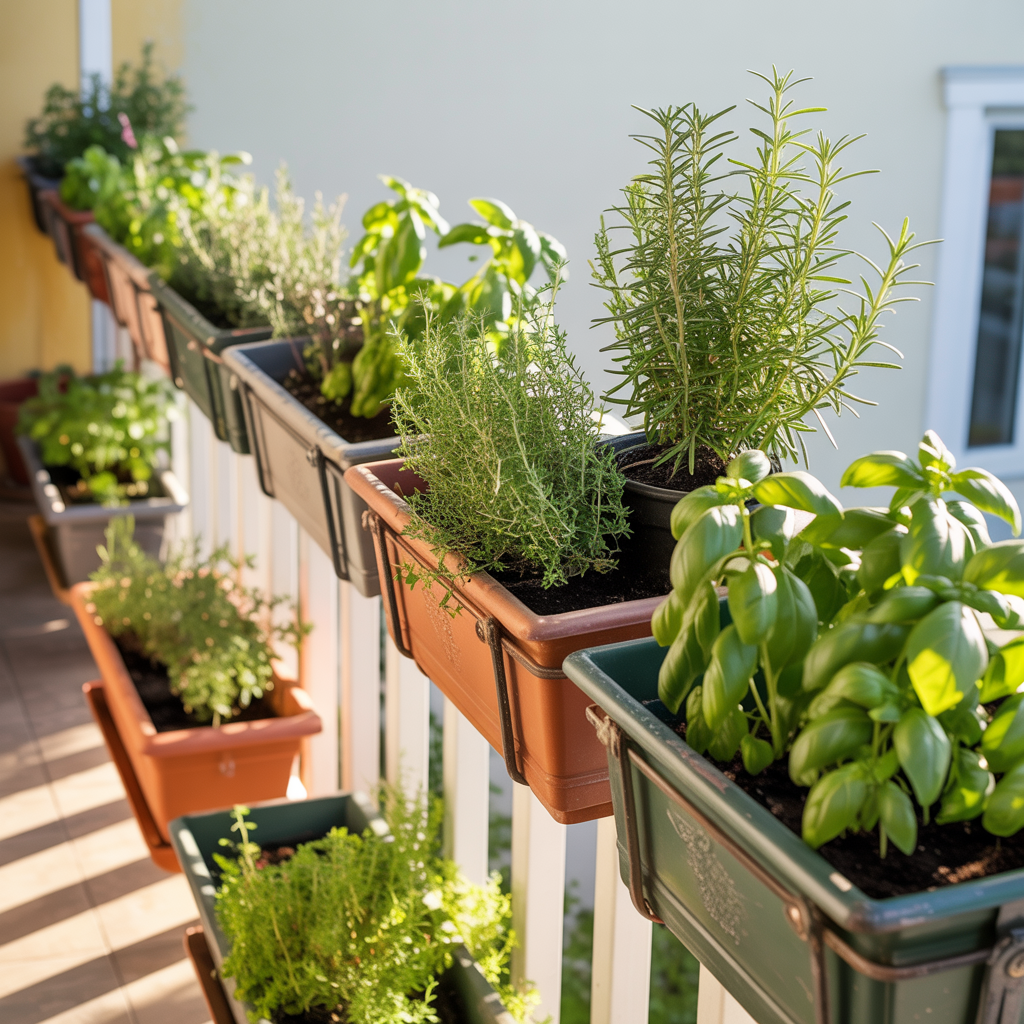
Balcony railings are often unused but can become valuable growing areas.
By attaching planters to the railing, you place herbs where they receive the most light while keeping the main space clear.
This layout is ideal for narrow balconies where floor space is limited. Herbs that enjoy sunlight, such as rosemary and basil, perform especially well in this position.
6. Tiered Shelf Herb Garden (Better Light Distribution)
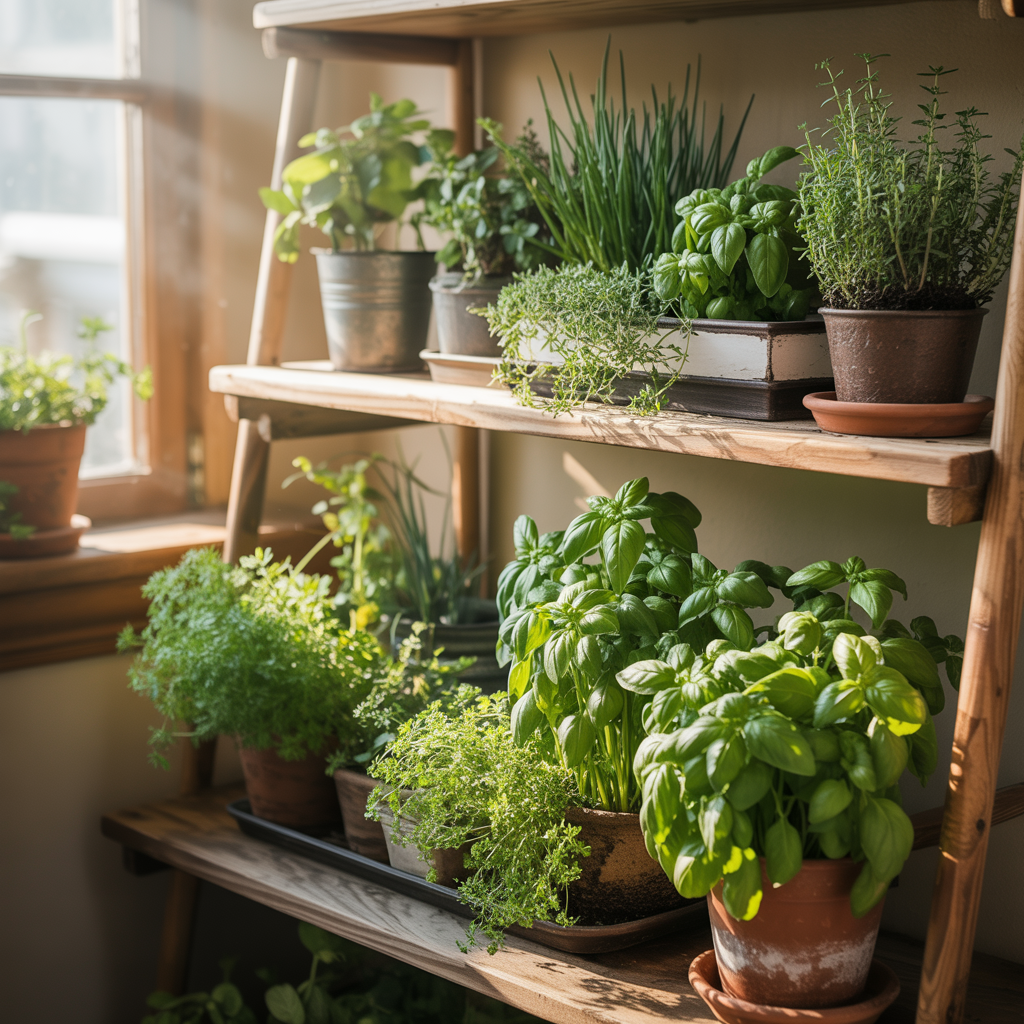
A tiered shelf creates multiple levels for plants.
Each level receives slightly different light conditions, which allows you to place herbs based on their needs. This prevents overcrowding and improves airflow.
Larger plants can be placed on lower levels, while smaller herbs sit above. This setup is simple but effective for organizing a small herb garden.
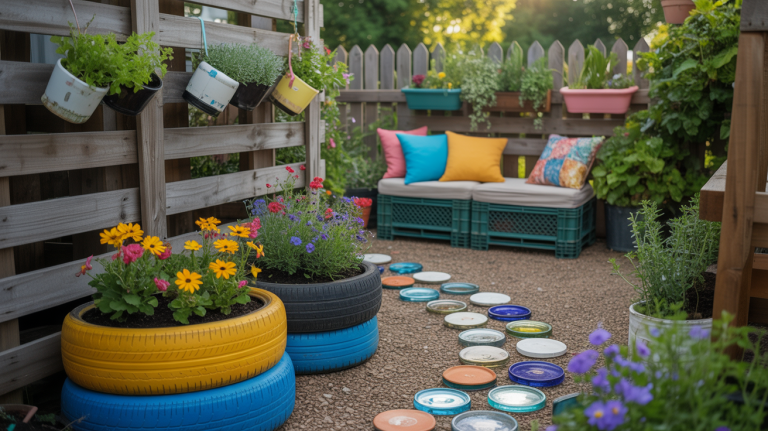
7. Recycled Container Herb Garden (Budget-Friendly Option)
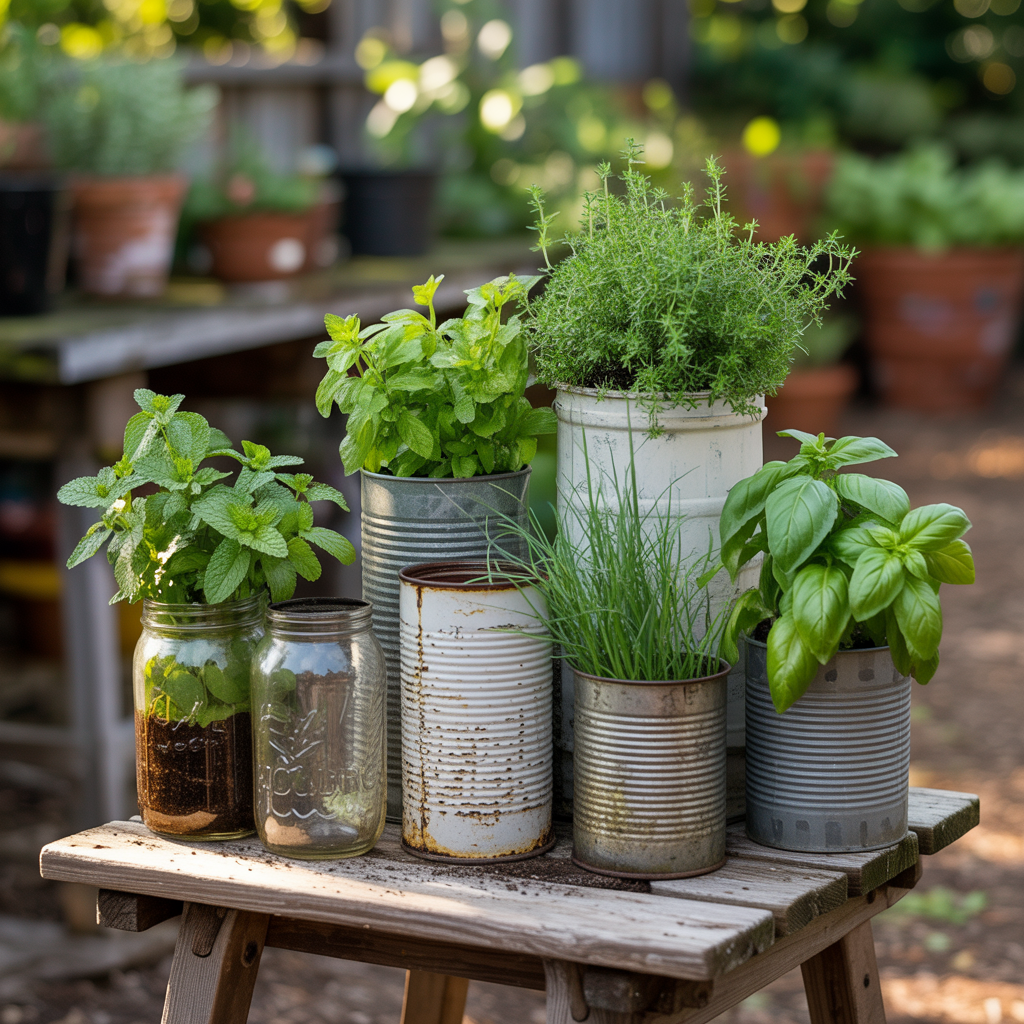
Everyday materials can be turned into herb planters.
Items such as jars, cans, or small boxes can hold herbs when prepared properly. Adding drainage holes and using suitable soil is essential.
This idea works well when combined with cheap garden ideas using everyday materials, where simple items become functional garden tools.
It is a practical way to start without spending money on new containers.
8. Kitchen Herb Station (Convenience First)
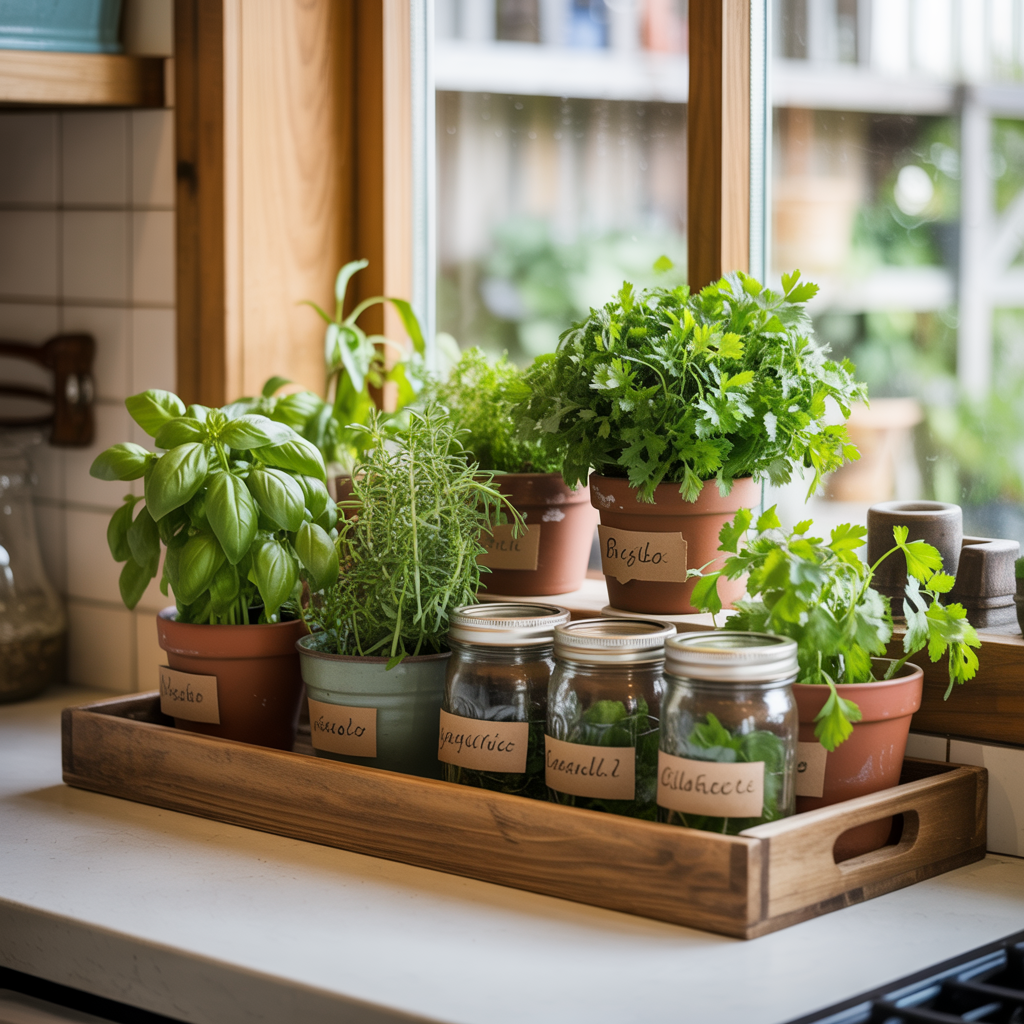
Placing herbs near the kitchen makes them easier to use and maintain.
A small shelf or tray near a window allows you to access herbs quickly while cooking. This increases the chances of regular care and harvesting.
This setup works well for frequently used herbs like basil, parsley, and cilantro. It turns gardening into part of your daily routine.
9. Drawer Herb Garden (Hidden Storage Turned Growing Space)
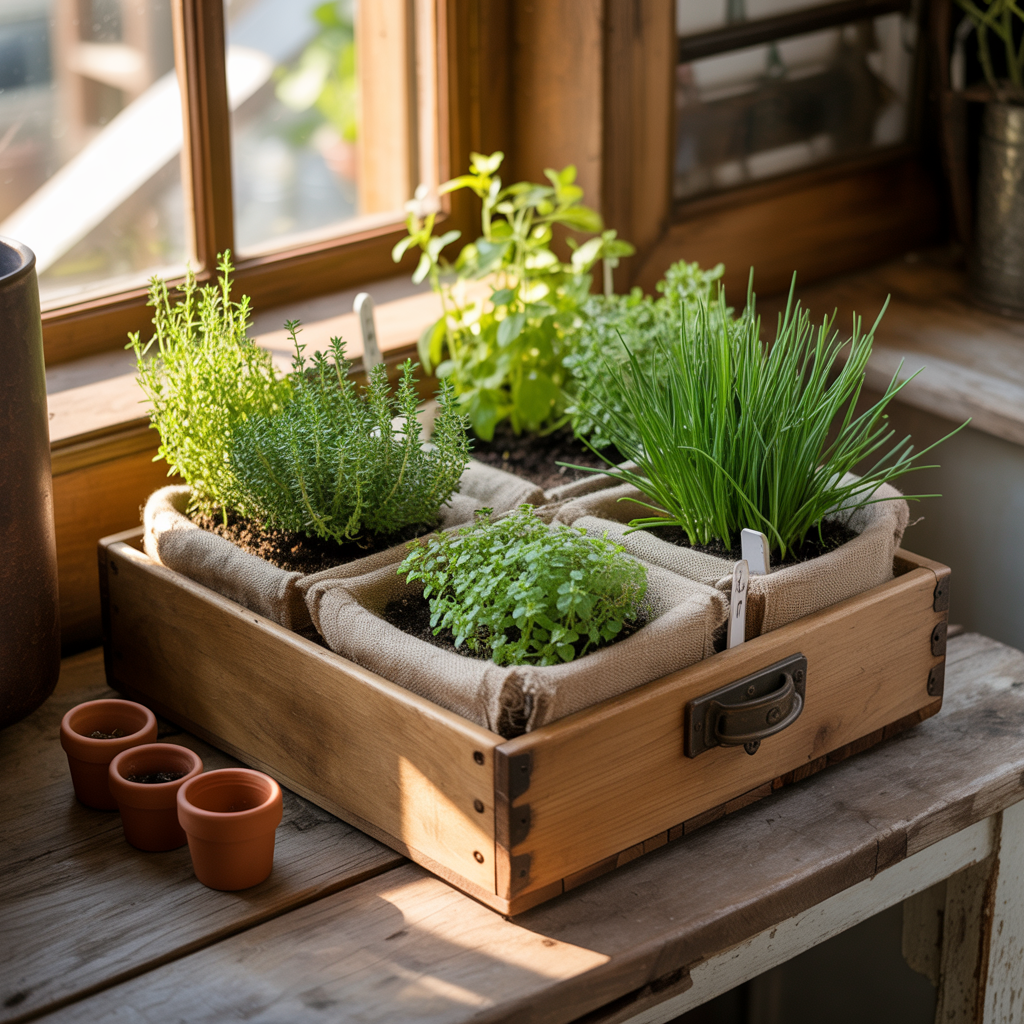
Old drawers can be turned into compact herb beds.
By adding drainage holes and lining the inside, a drawer becomes a shallow planter that works well for herbs with smaller root systems. It can sit on the floor, a table, or even be stacked for a layered effect.
This setup works best for herbs like thyme, oregano, and chives. It is a good option when you want a contained, tidy look without using traditional pots.
10. Window Rail Herb Garden (Maximize Narrow Spaces)
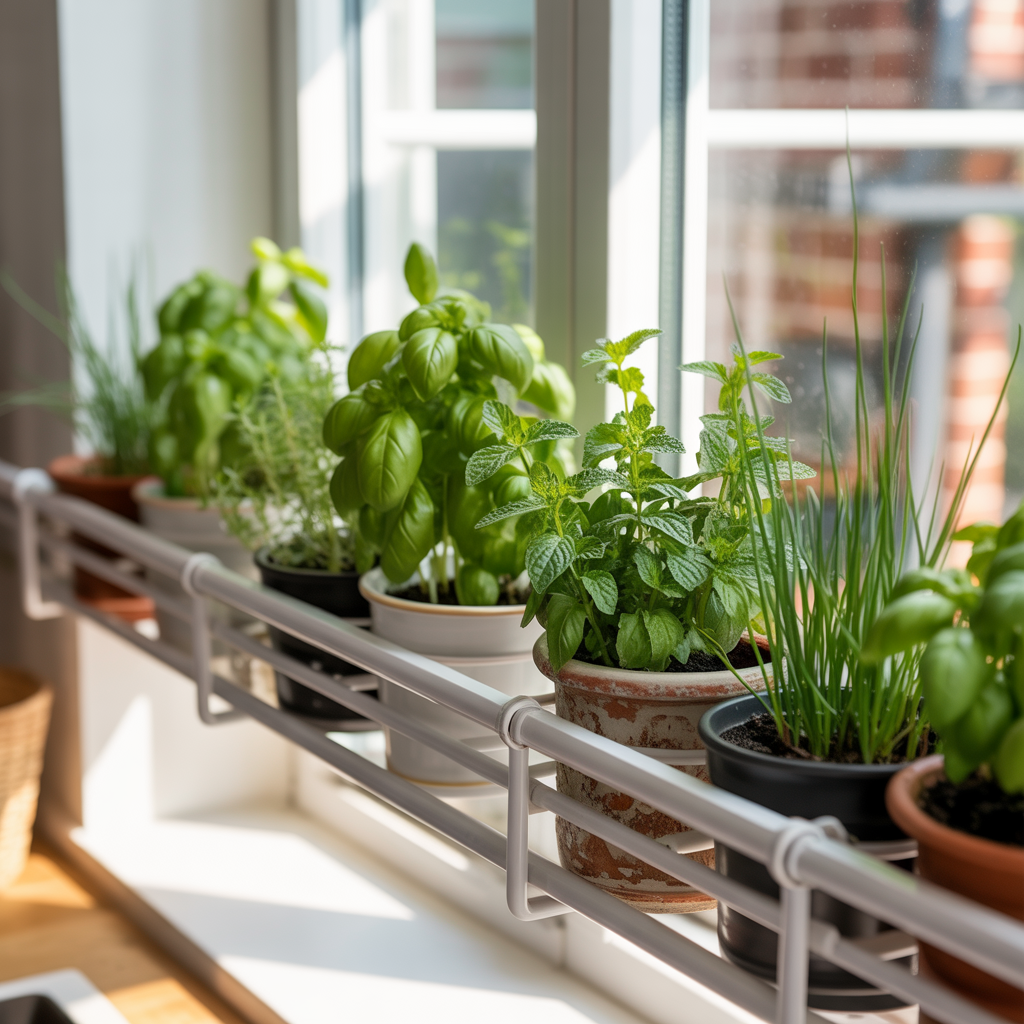
A narrow rail placed along a window can hold several small containers in a row.
This layout is useful when the windowsill itself is too small. The rail extends your growing space without taking up extra room.
It keeps herbs close to light while maintaining a clean and organized appearance.
11. Pocket Fabric Wall Garden
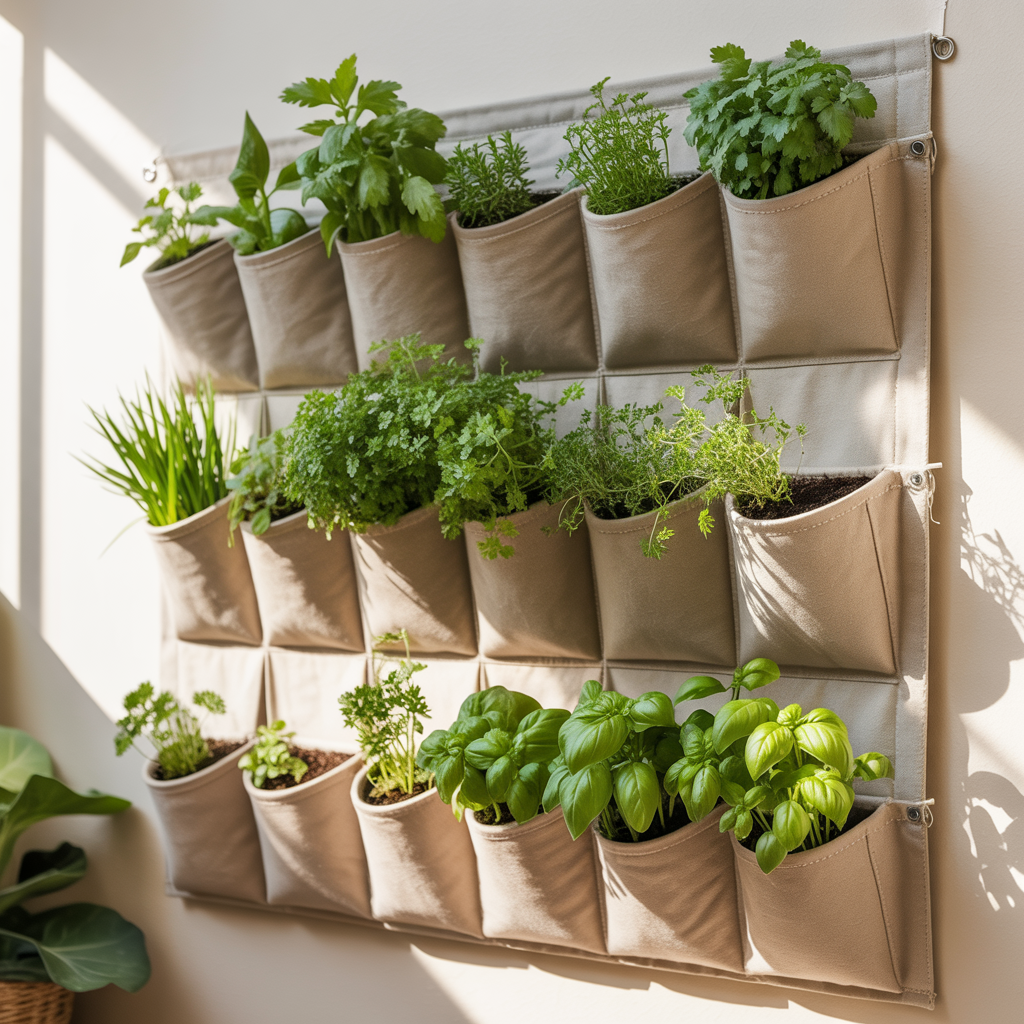
A fabric pocket organizer can be repurposed into a vertical herb garden.
Each pocket holds soil and a small plant, creating a compact system that uses vertical space efficiently. It works especially well on walls that receive consistent light.
Herbs like parsley, cilantro, and basil adapt well to this setup.
12. Rotating Herb Tray (Light Optimization Setup)
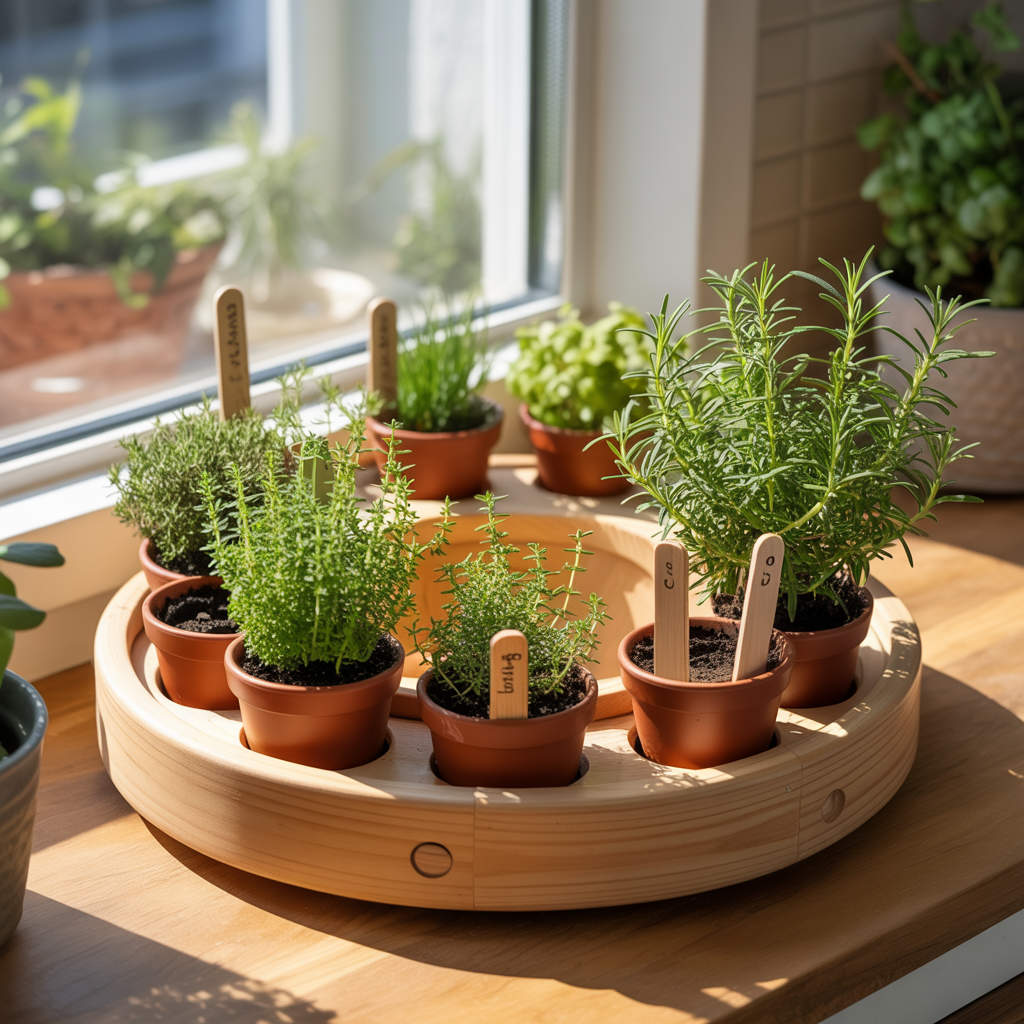
A rotating tray allows you to turn your herbs easily throughout the day.
This helps ensure that all plants receive even light, especially when light comes from one direction. It also prevents plants from leaning or growing unevenly.
This idea works well for windowsill gardens and small container setups.
13. Corner Stack Herb Garden
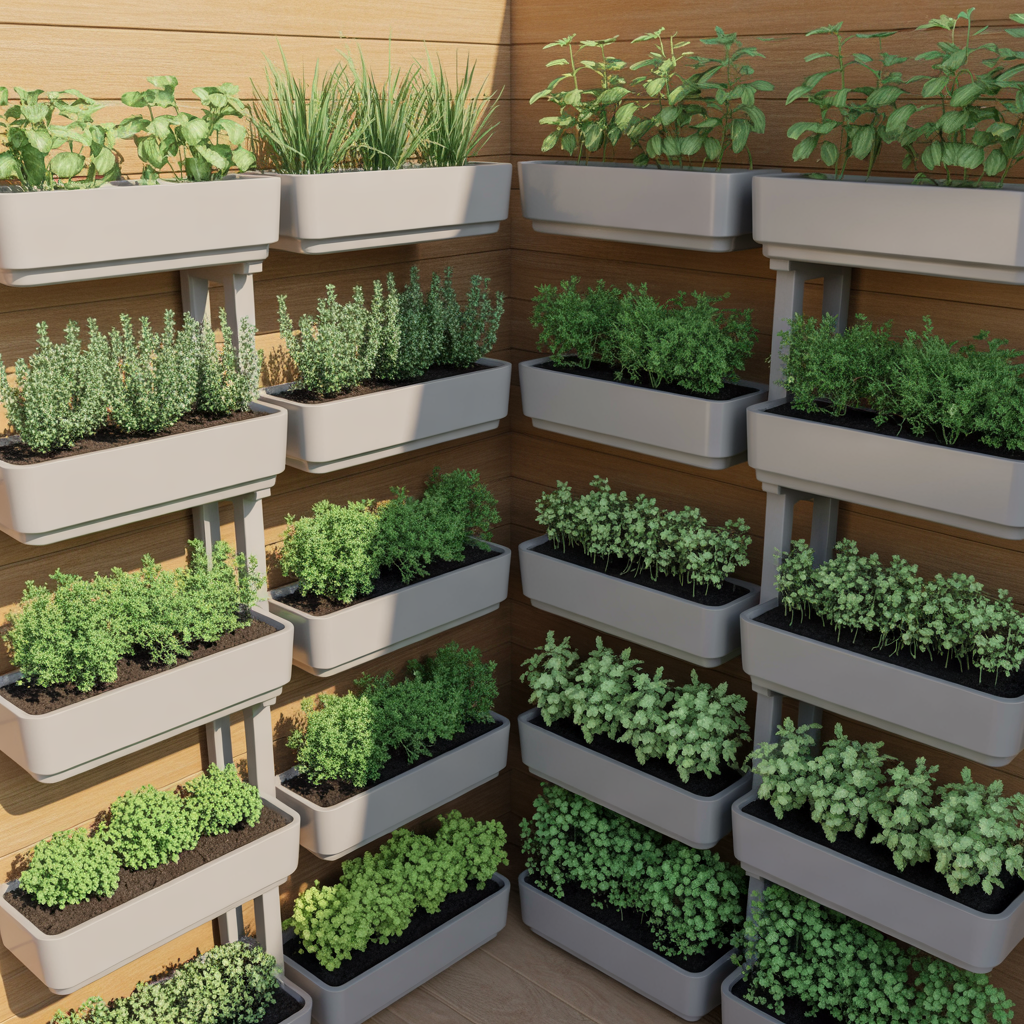
Corners are often unused but can hold a surprising number of plants.
By stacking containers or using a tiered stand, you can turn a corner into a vertical growing area.
This keeps the rest of the space open while still increasing plant capacity. This layout works well in both indoor and outdoor small spaces.
14. Mixed Light Herb Layout (Smart Placement by Need)
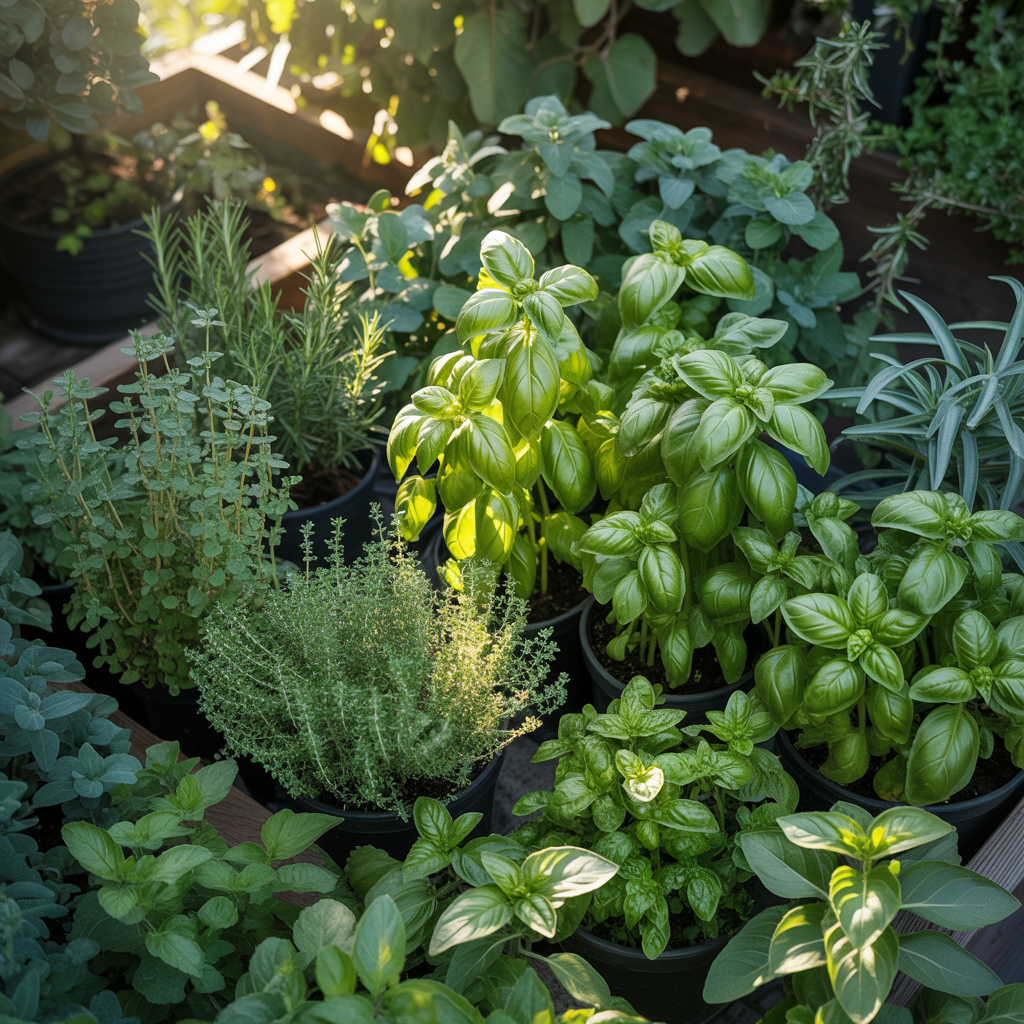
Instead of placing all herbs together, this idea separates them based on light requirements.
Sun-loving herbs are placed in the brightest spots, while more tolerant ones are placed slightly away from direct light. This improves growth without needing extra space.
It is a simple adjustment that makes a big difference in plant performance.
15. Sliding Window Shelf Garden
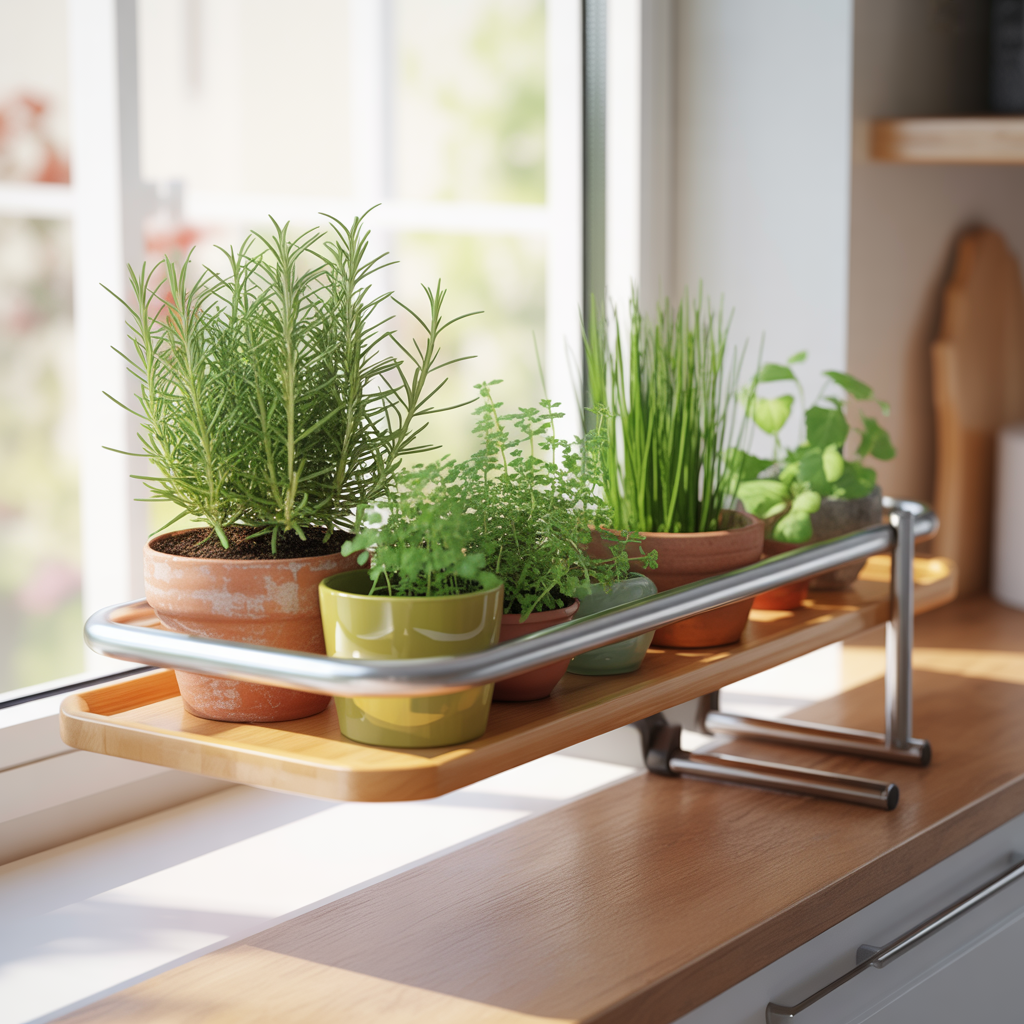
A movable shelf placed near a window allows flexible positioning.
You can slide herbs closer to light during certain times of the day and move them back when needed.
This is especially useful in spaces where light changes throughout the day. This setup provides flexibility without requiring a full redesign.
16. Compact Indoor-Outdoor Transfer Garden
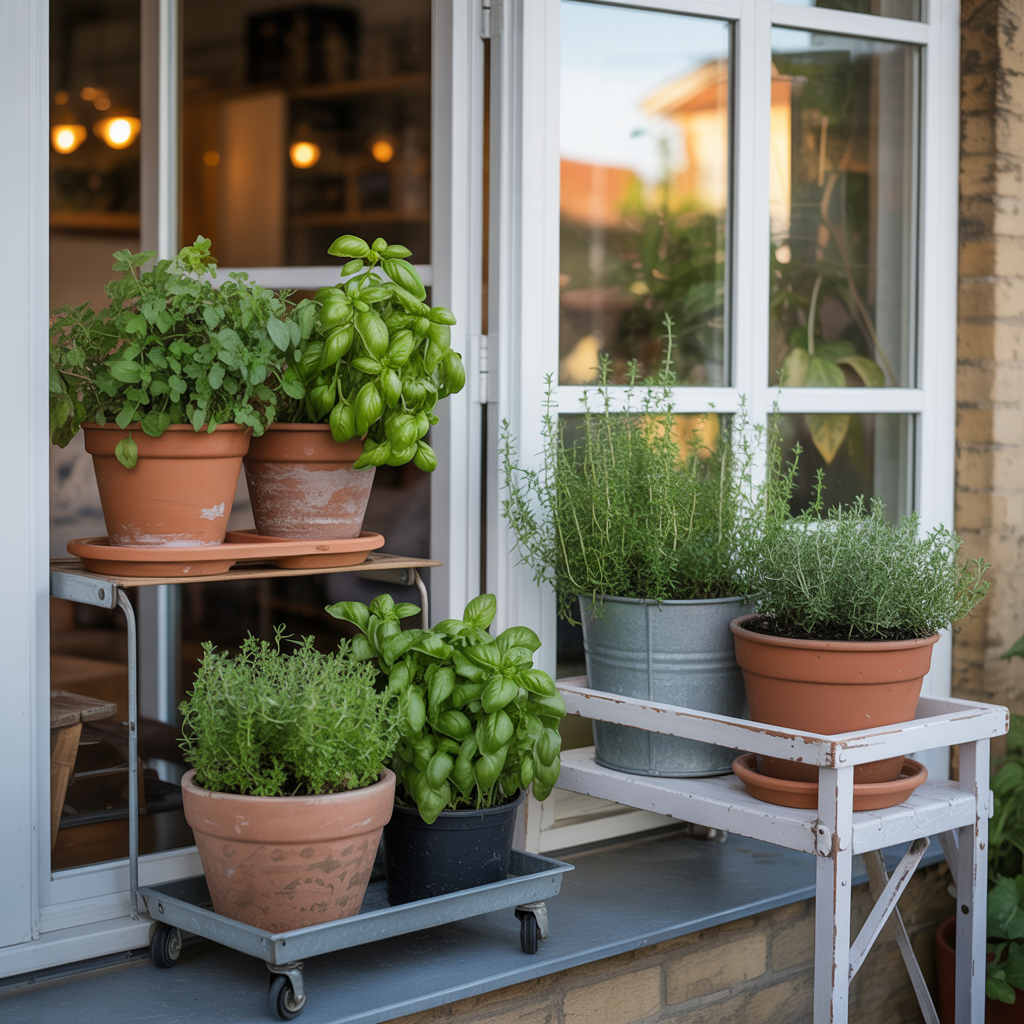
This idea uses portable containers that can move between indoor and outdoor spaces.
Herbs can be placed outside during the day for better light and brought inside when conditions change.
This helps maintain consistent growth even in less ideal environments. It works well for people with limited permanent outdoor space.
17. Minimalist Single-Line Herb Layout
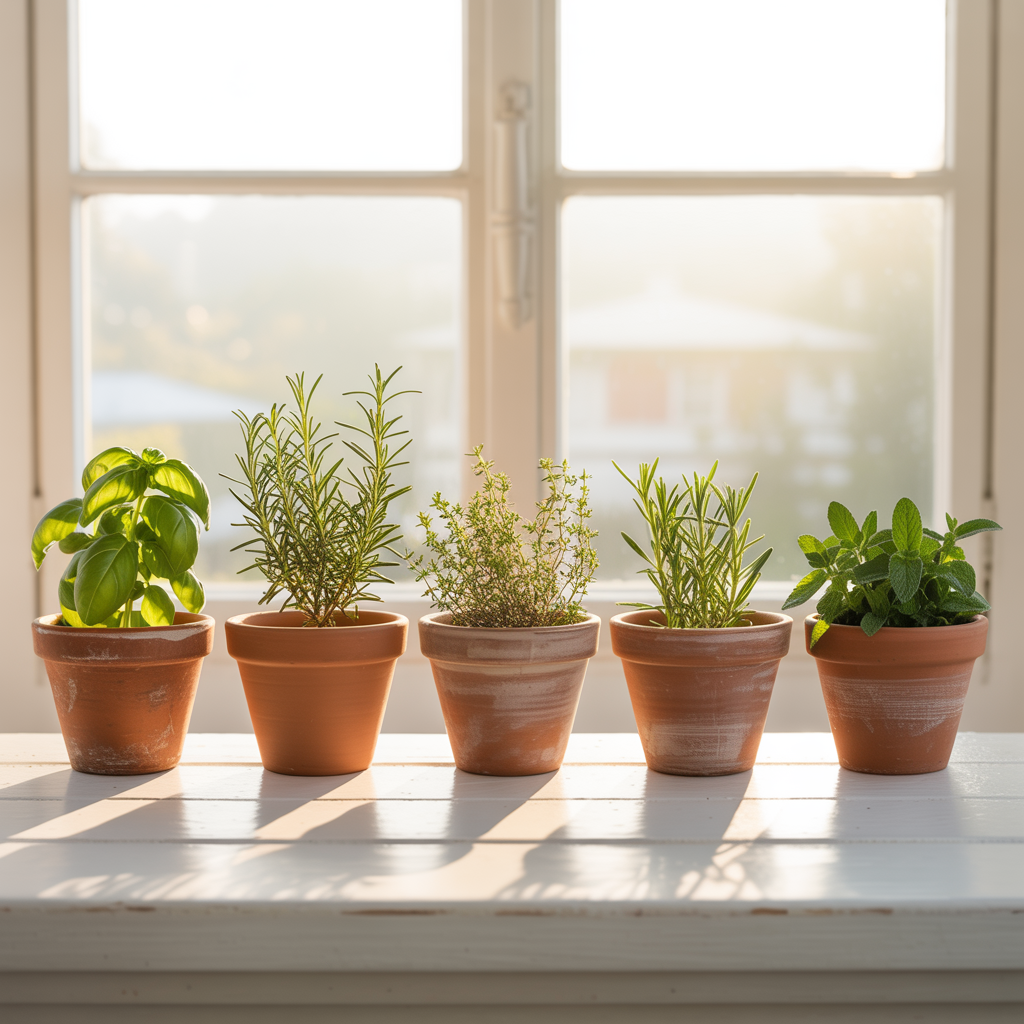
Instead of grouping plants, arrange them in a single clean line.
This layout improves airflow and ensures each plant receives equal light exposure. It also creates a neat, uncluttered appearance.
It works well along railings, shelves, or narrow spaces.
18. Multi-Container Cluster by Usage (Kitchen-Based Layout)
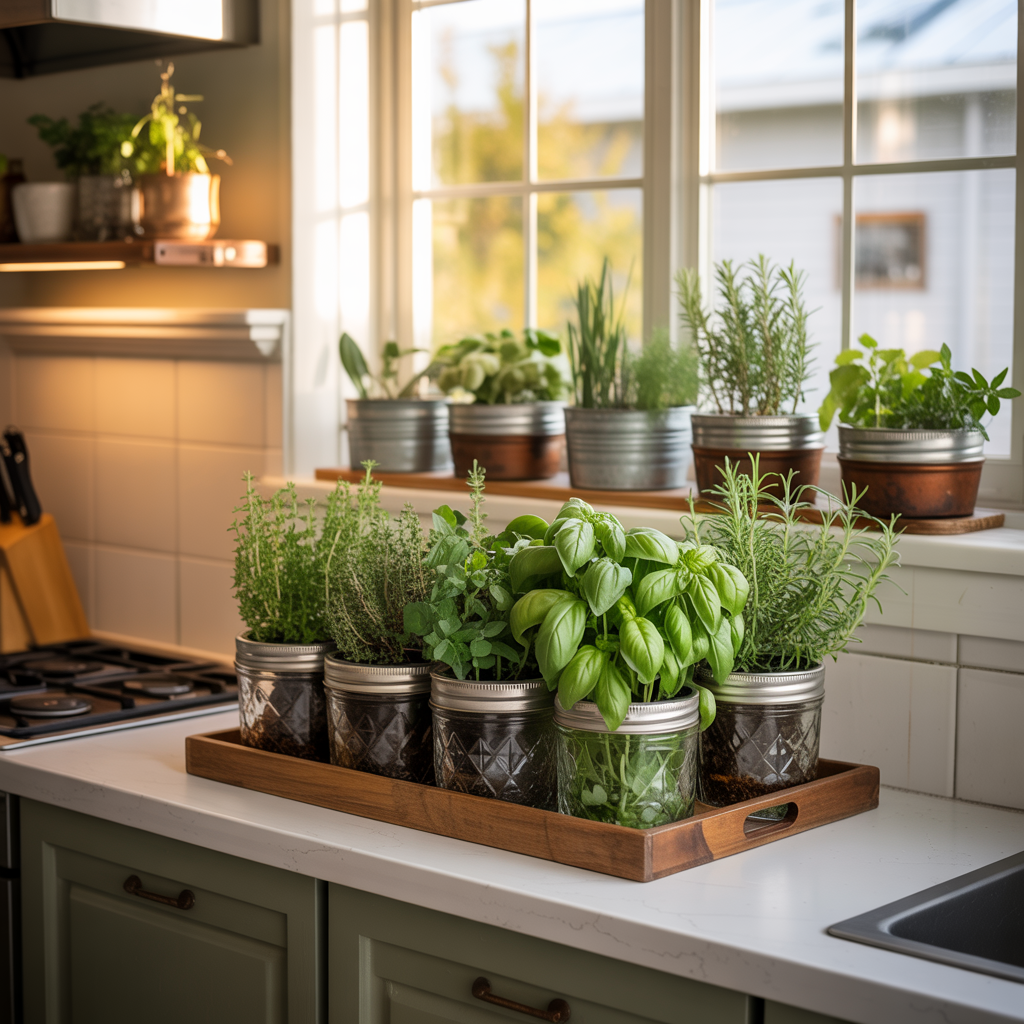
Group herbs based on how you use them rather than how they grow.
For example, place cooking herbs together near the kitchen and less frequently used herbs in another area.
This makes harvesting more convenient and encourages regular use. It is a practical layout that connects gardening with daily habits.
Best Herbs for Small Spaces
Not all herbs behave the same way, so choosing the right ones makes a big difference.
Basil grows quickly and responds well to regular trimming. Mint spreads easily and works best in its own container. Rosemary prefers drier conditions and needs good drainage.
Parsley and chives are reliable choices for beginners because they adapt well to different conditions.
Starting with a few easy herbs helps you build confidence before expanding your garden.
Common Mistakes in Small Herb Gardens
One of the most common mistakes is overcrowding. Placing too many herbs in a small area reduces light and airflow. This often leads to weak growth.
Another mistake is using containers without proper drainage. Water buildup can damage roots even when everything else seems correct.
Ignoring light conditions is also a frequent issue. Herbs placed in low light may survive but will not grow well.
How to Set Up Your Herb Garden Step by Step
Start by identifying the brightest spot in your space. Choose containers with proper drainage and fill them with suitable soil. Select a few herbs that match your light conditions.
Arrange the containers in a way that allows easy access and proper spacing. Avoid placing taller plants in front of smaller ones.
Water based on how the soil dries rather than following a fixed schedule. Observe how the plants respond and adjust gradually.
How to Keep Your Herb Garden Healthy Over Time
A small herb garden requires regular but simple care.
Trimming herbs encourages new growth and prevents overcrowding. Rotating containers occasionally helps ensure even light exposure.
Monitoring soil moisture helps prevent overwatering. Adjusting placement based on seasonal light changes keeps growth consistent.
These small habits make a noticeable difference over time.
Frequently Asked Questions
How much space do I need for a herb garden?
Even a small windowsill or a few containers can be enough.
What is the easiest herb to grow for beginners?
Basil, mint, and chives are often the easiest to start with.
Can herbs grow without direct sunlight?
They need bright light, but direct sunlight is not always required.
How often should I water herbs?
Watering depends on how quickly the soil dries rather than a fixed schedule.
Can I grow multiple herbs in one container?
It is better to separate herbs with different needs to avoid imbalance.
Final Thoughts
A small space does not limit your ability to grow herbs.
When the layout supports light, drainage, and access, even a compact setup can produce consistent results. The key is to keep things simple and adjust based on what you observe.
With the right approach, a small herb garden becomes easy to manage and rewarding to maintain.