Best Place to Put Spider Plant Indoors for Faster Growth
A spider plant often appears easy to care for because it tolerates a wide range of indoor conditions. The leaves remain green, the structure stays intact, and the plant rarely shows dramatic signs of stress. However, a stable appearance does not always reflect active growth.
Many indoor spider plants remain almost unchanged for long periods, even though they are not unhealthy. This situation usually indicates that the plant has enough resources to maintain itself, but not enough to expand. The difference between survival and growth is subtle, and placement is one of the most important factors that determines which state the plant enters.
The exact location of a spider plant controls how much usable light reaches the leaves, how quickly the soil dries, and how stable the surrounding environment remains. When placement is adjusted correctly, growth becomes more consistent without requiring major changes in watering or feeding.
Why Placement Matters More Than Routine Care
Care routines such as watering and feeding are often emphasized, but they only work effectively when placement supports them. Light drives energy production, and energy determines whether the plant produces new leaves or simply maintains its current structure.
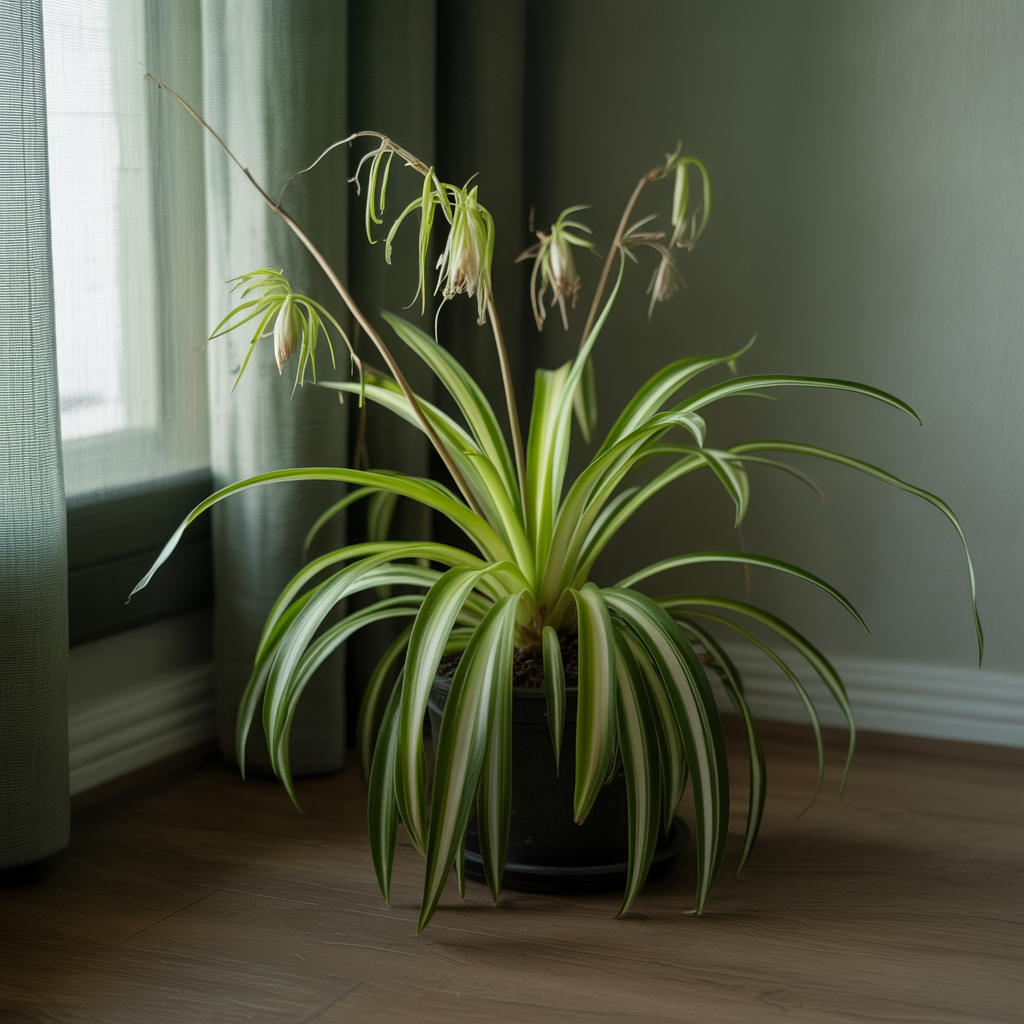
A spider plant placed in insufficient light may still look healthy because it adapts by slowing down its growth. This behavior is often misunderstood as a sign that the plant is thriving, when in reality it is conserving energy.
This pattern is closely related to why spider plant looks healthy but doesn’t grow, where the plant maintains balance instead of developing further. Placement is usually the underlying cause of that condition.
What Defines the “Best Place” Indoors
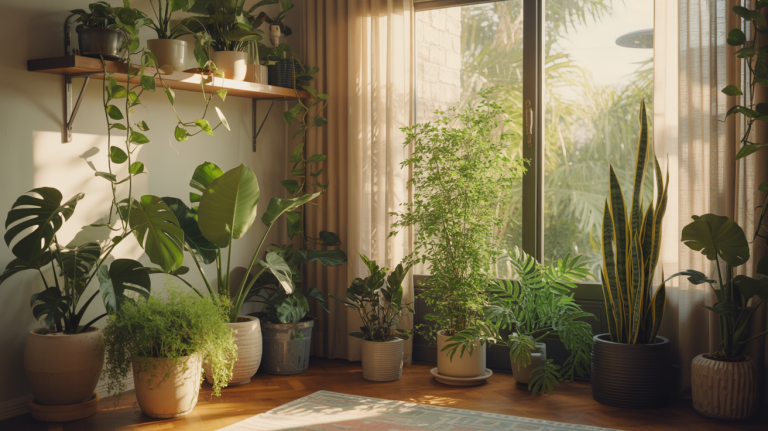
The best location is not simply the brightest spot in the room, and it is not the area that receives the most sunlight at one specific time of day. A suitable placement provides consistent brightness for several hours and avoids extremes that disrupt the plant’s internal balance.
Indirect light that remains stable throughout the day is far more effective than short bursts of intense direct sunlight. Stability allows the plant to regulate water use and maintain steady energy production.
A suitable environment also supports predictable drying of the soil. When soil moisture decreases gradually rather than remaining wet or drying too quickly, the roots function more efficiently and support stronger growth.
How to Evaluate Light in a Practical Way
Light intensity can be difficult to judge by appearance alone because indoor spaces often look brighter than they actually are for plants. Instead of relying on how the room feels, it is more useful to observe how light behaves.
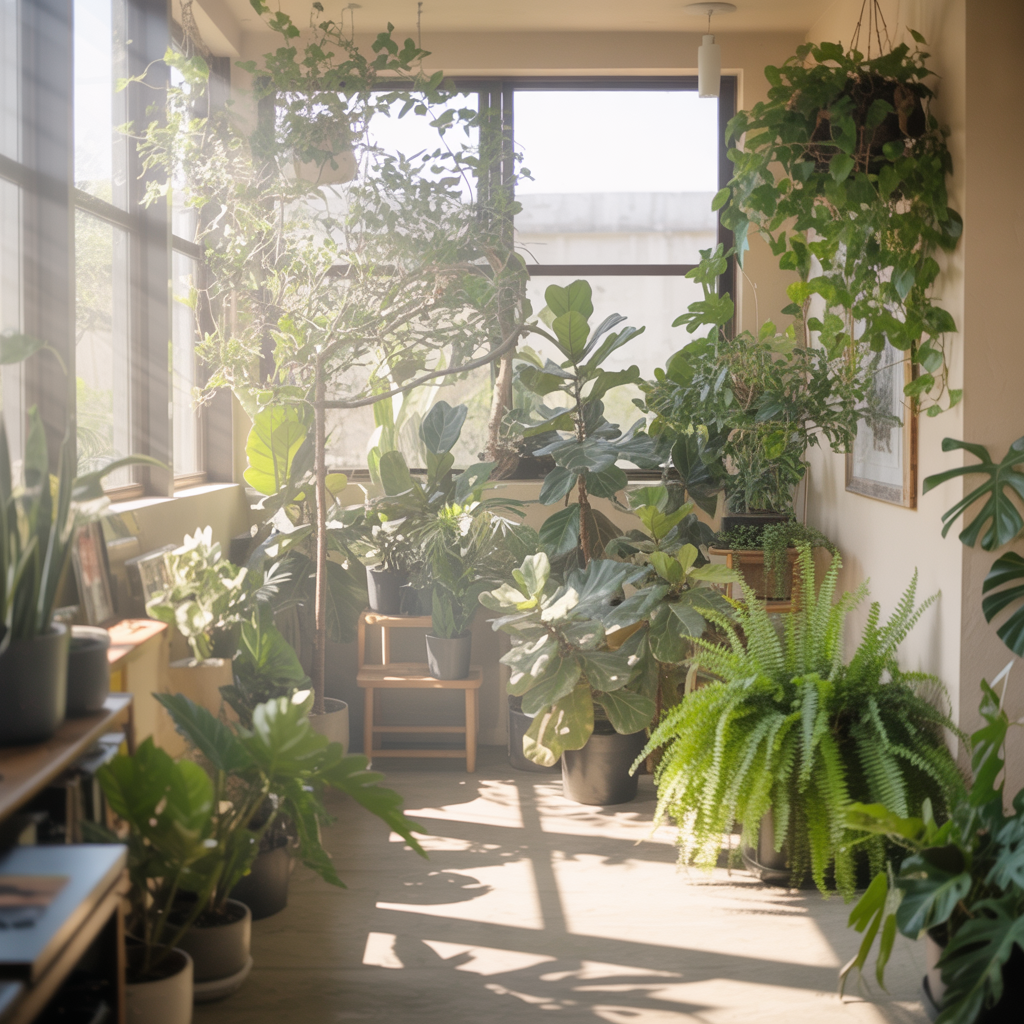
Soft, diffused shadows that remain visible throughout the day usually indicate strong indirect light. A space where shadows are barely visible often lacks sufficient intensity for active growth. Sharp shadows, on the other hand, often indicate direct sunlight that may be too strong for extended exposure.
Another reliable indicator is how quickly the soil dries after watering. When soil dries gradually within a few days, it usually reflects active water use supported by adequate light. When soil remains wet for an extended period, it often signals that light levels are limiting plant activity.
Best Indoor Locations for Faster Spider Plant Growth
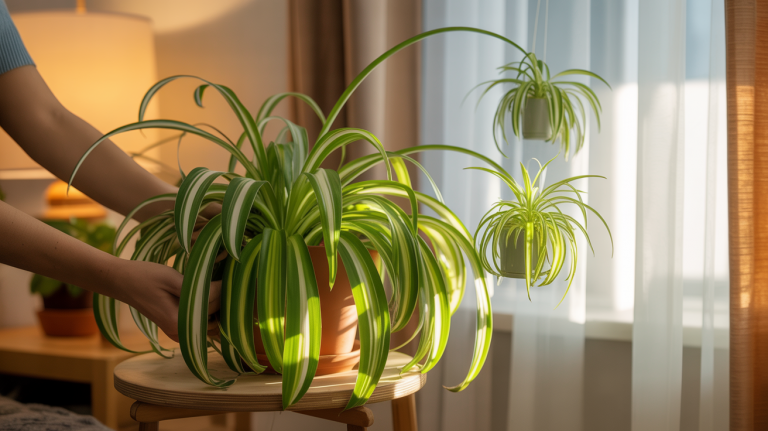
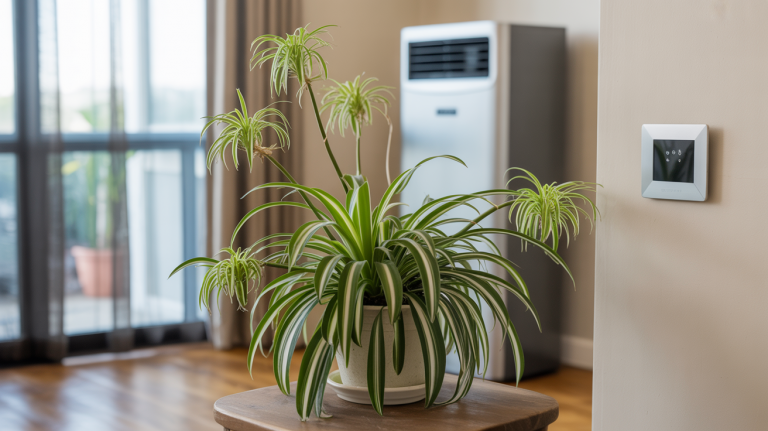
1. Placement Beside a Window With Filtered Light
A position near a window with a light curtain provides one of the most balanced environments for growth. The curtain diffuses direct sunlight while maintaining a high level of brightness, which allows the plant to receive steady energy without stress.
This type of placement works particularly well in apartments or homes with strong natural light. The plant benefits from consistent exposure while avoiding the risks associated with direct sunlight.
Over time, plants in this position tend to produce new leaves at a steady rate and maintain a fuller, more symmetrical shape.
2. Position Within One Meter of an East-Facing Window
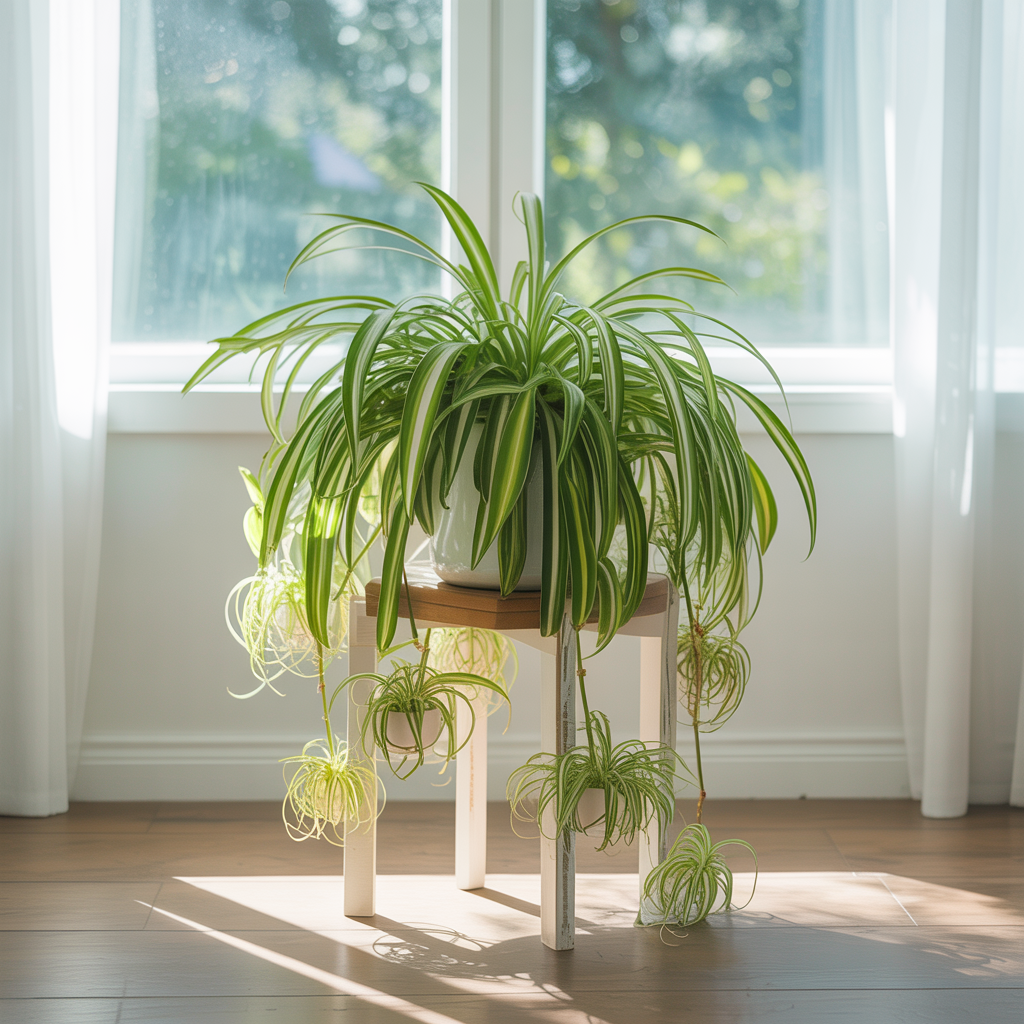
An east-facing window offers gentle morning light that supports growth without overheating the plant. This type of light provides several hours of usable brightness early in the day, which helps regulate the plant’s energy cycle.
Morning light is especially effective because it is consistent and less intense than afternoon sunlight. This allows the plant to maintain stable internal conditions throughout the day.
Plants placed in this location often develop evenly shaped leaves and maintain consistent growth patterns over time.
3. Slightly Offset From a South-Facing Window
South-facing windows provide strong light, but direct placement can be too intense for spider plants. Shifting the plant slightly to the side creates a more usable environment.
In this position, the plant still receives high brightness but avoids prolonged direct exposure. The light becomes indirect while remaining strong enough to support faster growth.
This adjustment often leads to noticeable improvements in leaf production and overall plant structure.
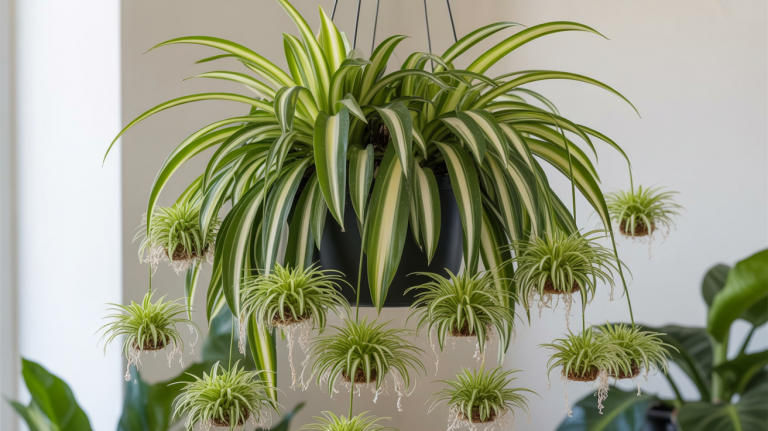
4. Hanging Placement Near a Bright Window
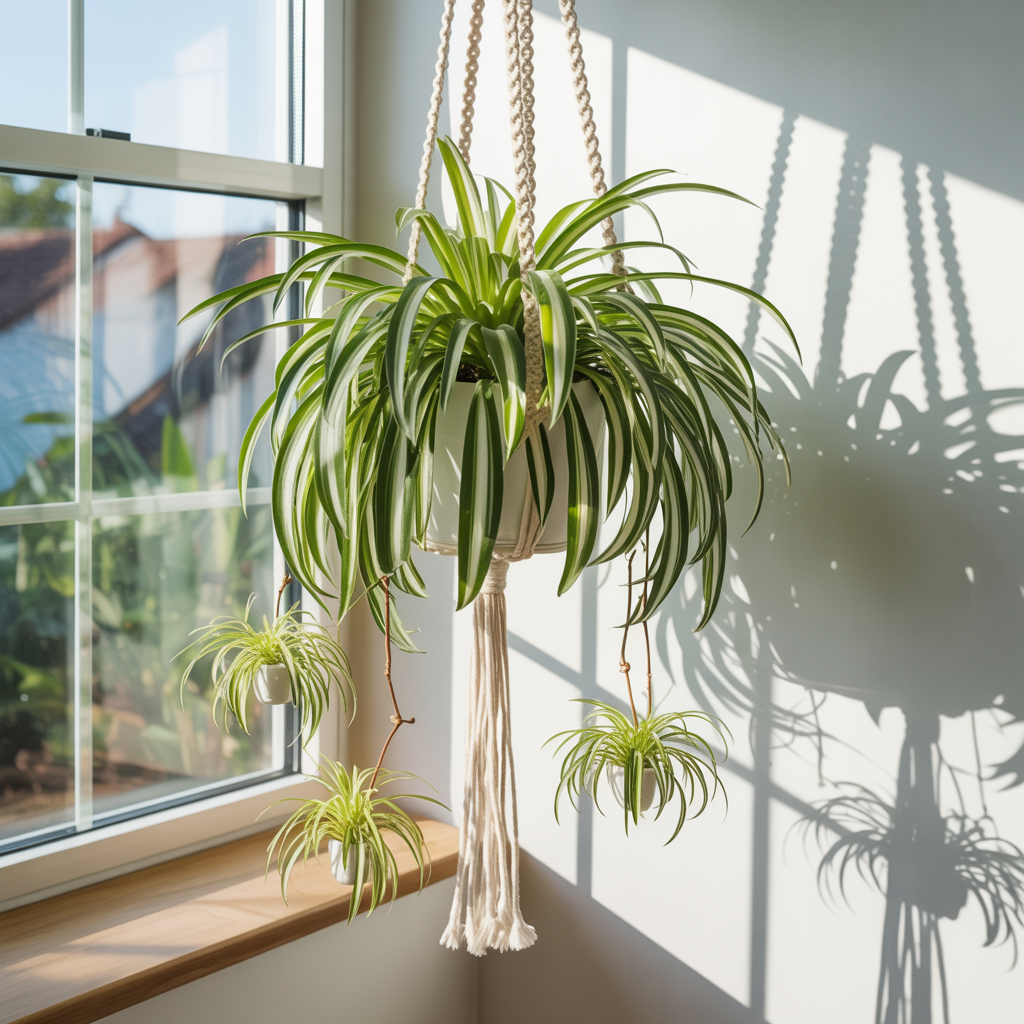
A hanging position allows light to reach the plant from multiple angles, which encourages more balanced growth. It also improves airflow around the leaves and soil, which helps regulate moisture levels.
Spider plants naturally produce arching leaves and stems, so a hanging placement supports their growth habit while enhancing light exposure.
In many cases, plants placed in this way also begin producing longer stems and spiderettes, as described in how to make spider plant produce more babies.
Placements That Limit Growth Without Obvious Signs
Deep Interior Locations
A plant placed several meters away from a window may still appear healthy, especially in rooms with light-colored walls or reflective surfaces. However, the intensity of light decreases significantly with distance.
In these locations, the plant often remains green but produces fewer new leaves. Growth becomes slow and irregular, which can persist for long periods without visible decline.
Direct Exposure Through Glass
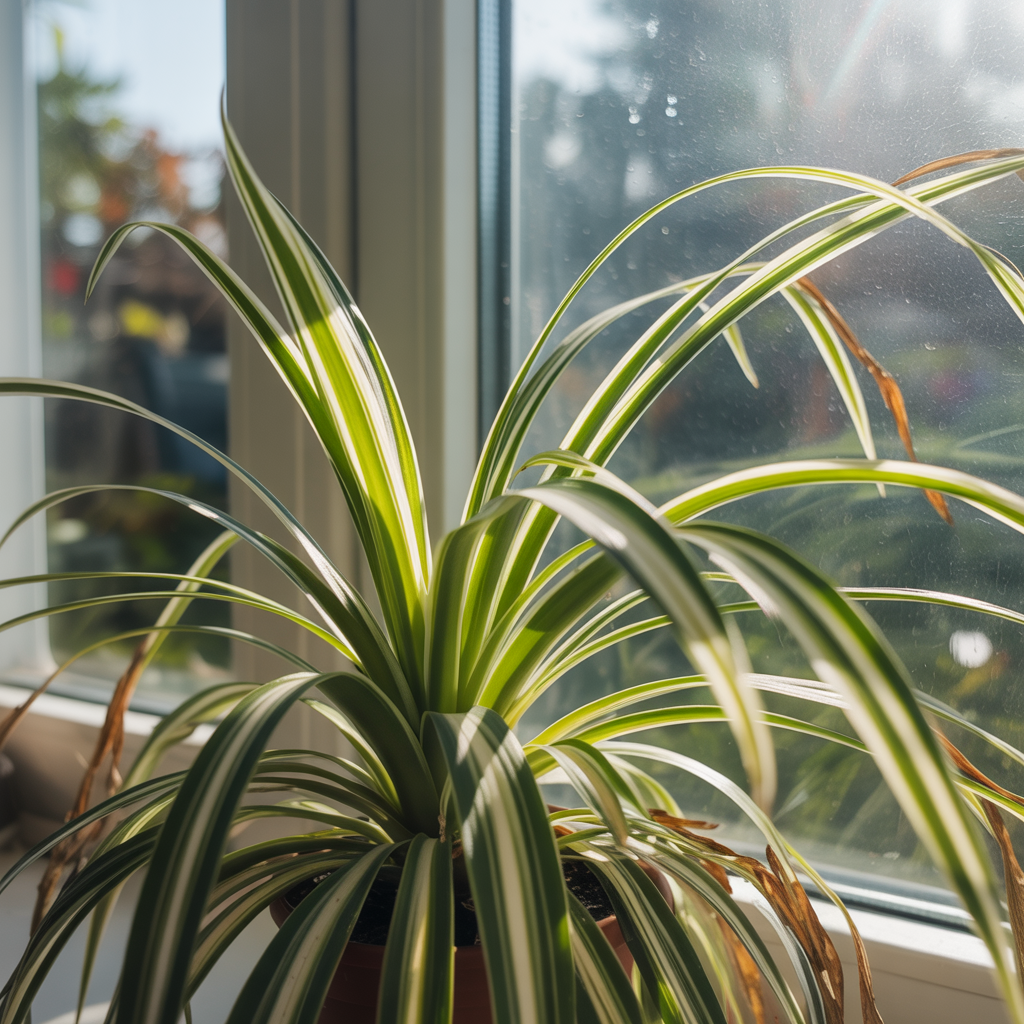
Placing a spider plant directly against a window with strong sunlight can lead to subtle stress. Glass can intensify heat and light, which may affect leaf condition over time.
Instead of improving growth, this type of exposure often causes the plant to reduce activity while protecting itself. Leaves may show signs of fading or uneven coloration.
Indirect positioning typically produces better long-term results.
Areas With Unstable Airflow
Placement near air conditioners, heaters, or frequently opened doors creates inconsistent airflow. These fluctuations affect how quickly moisture leaves the soil and how the plant regulates water.
When conditions change frequently, the plant focuses on maintaining balance rather than producing new growth. Stability in airflow is just as important as light consistency.
Adjusting Placement Based on Your Home Environment
Low-Light Homes
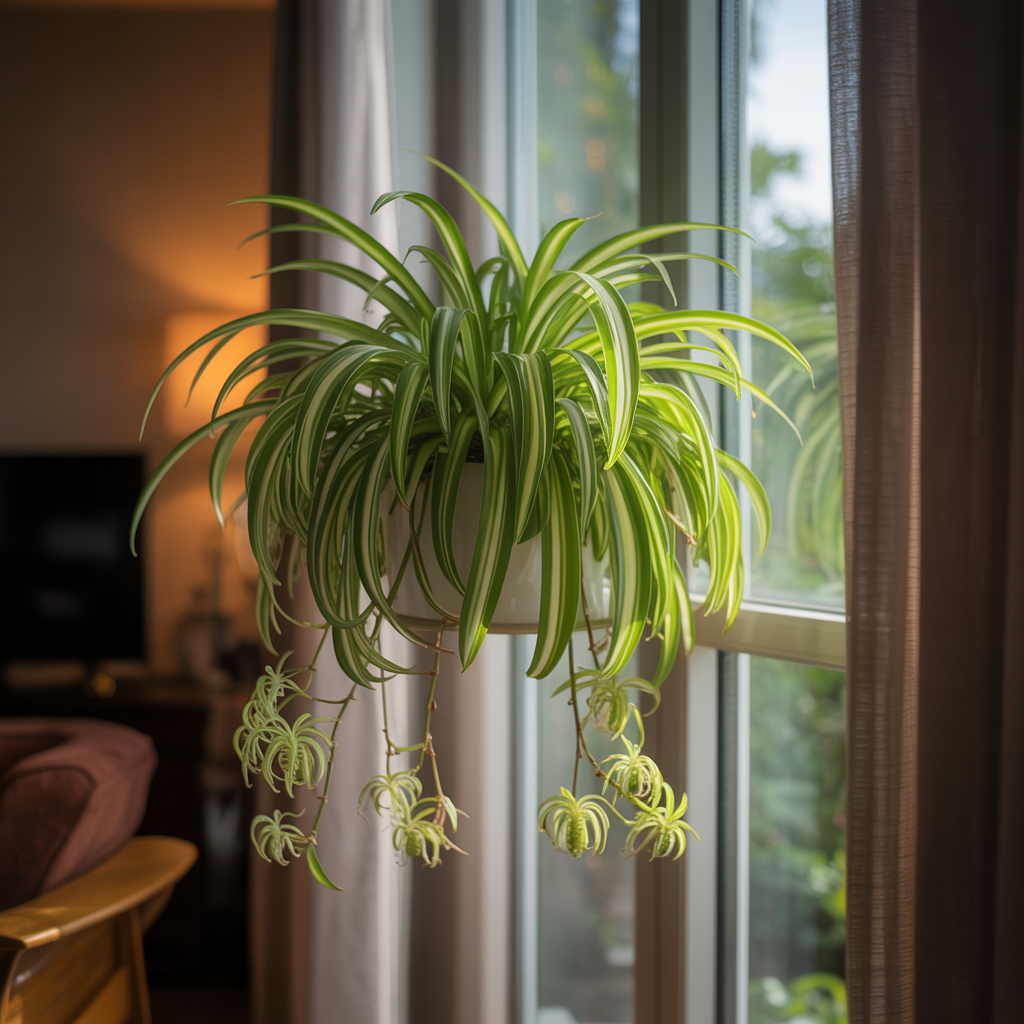
In homes with limited natural light, placement becomes the primary factor influencing growth. The brightest available spot should be prioritized, even if it is not ideal.
Reducing the distance between the plant and the window often improves growth more effectively than increasing watering or feeding. Even small increases in light exposure can lead to gradual improvement.
Homes With Strong Natural Light
In brighter homes, the goal is to control intensity rather than increase it. Curtains, blinds, or slight repositioning can transform harsh light into a more balanced environment.
This approach allows the plant to benefit from high brightness without experiencing stress. Balanced light supports both growth and leaf health.
Seasonal Changes in Light
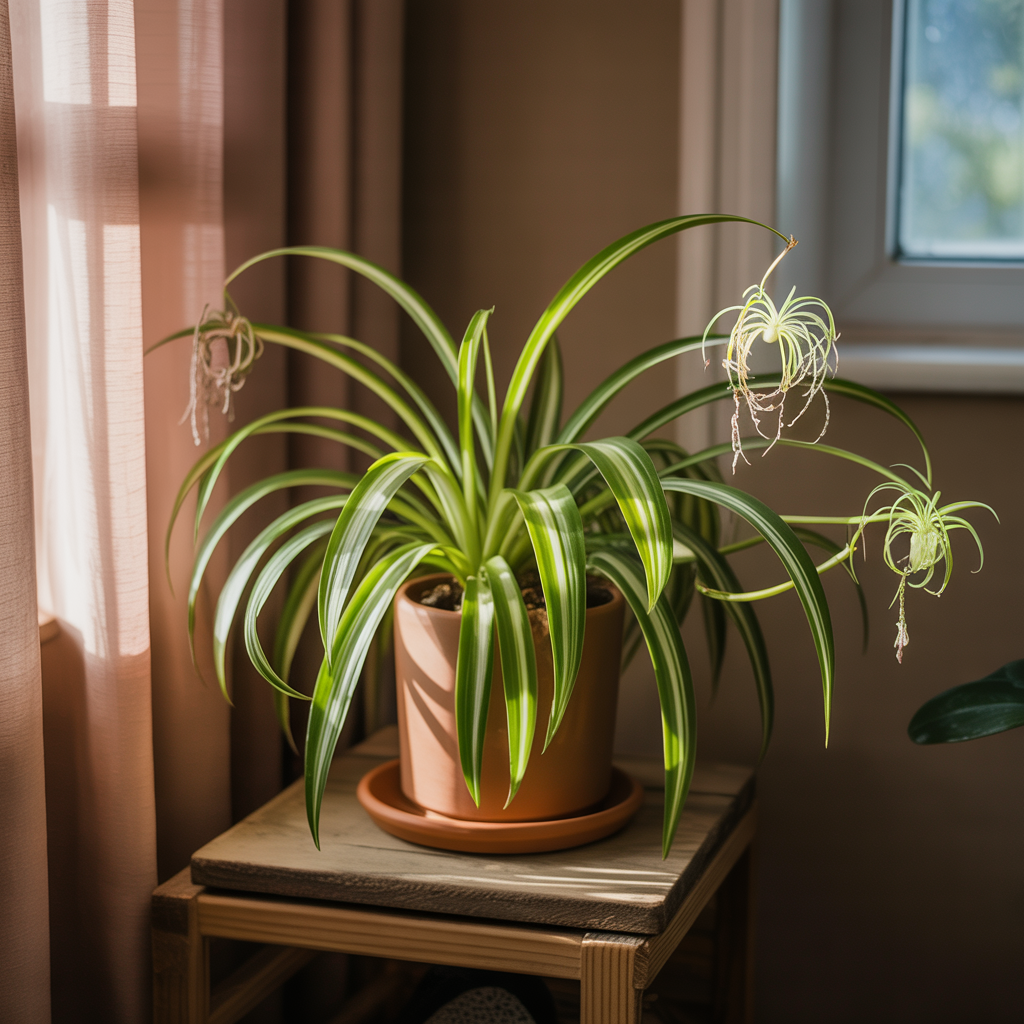
Light availability changes throughout the year, especially in indoor environments. A placement that works well in summer may become insufficient during winter months.
Adjusting the plant slightly closer to the window during darker periods helps maintain consistency. Seasonal awareness prevents extended periods of slow growth.
How Placement Influences Other Care Factors
Placement affects more than light exposure. It also influences how water behaves in the soil and how roots function over time.
In brighter locations, the plant uses water more actively, which leads to more predictable drying cycles. In lower light, water remains in the soil longer, which can affect root efficiency.
Understanding this relationship helps explain issues such as why spider plant leaves turn brown even with proper care, where water and environmental factors interact in subtle ways.
How to Know You Found the Right Spot
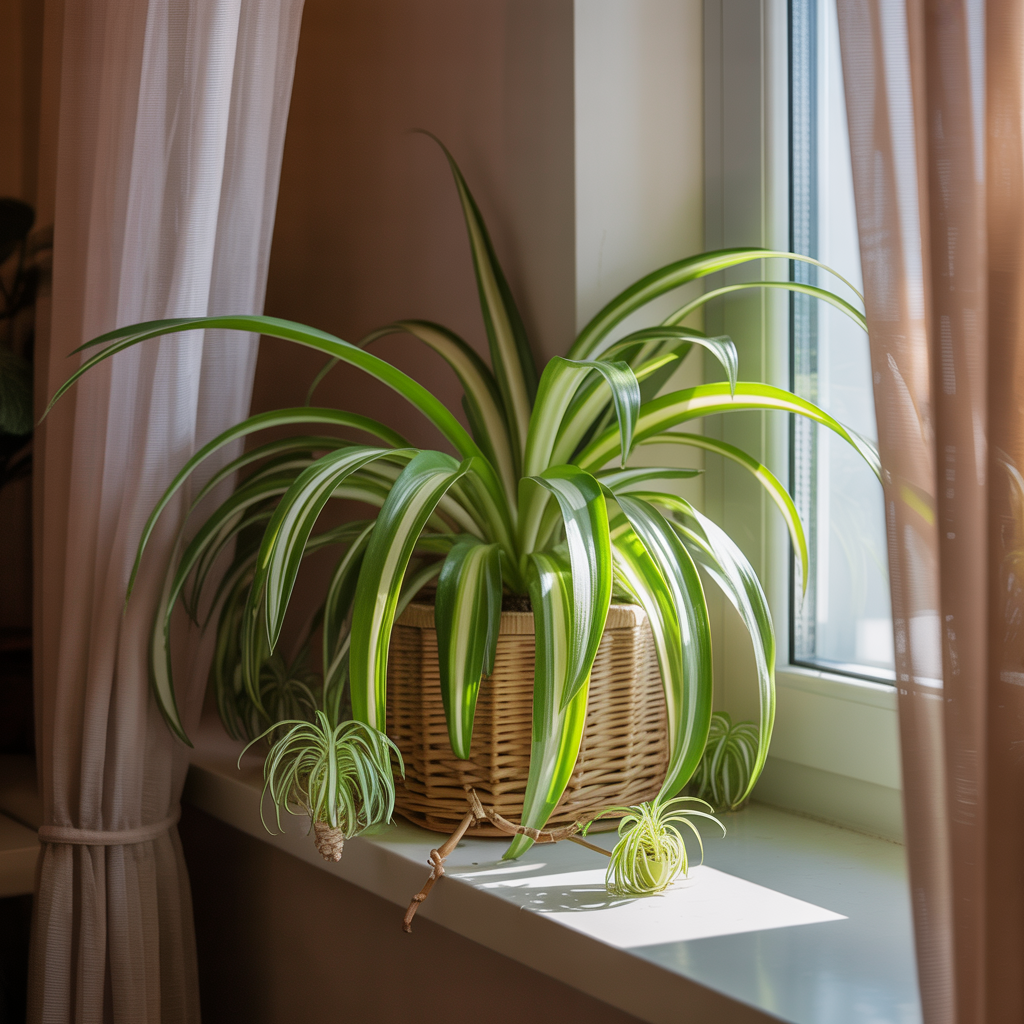
The correct placement does not produce immediate dramatic changes, but it creates consistent patterns.
New leaves begin to appear more regularly, and the plant develops a fuller structure. Leaf size becomes more uniform, and growth continues at a steady pace.
Over time, the plant may also produce longer stems and spiderettes, which indicates that energy levels are sufficient for reproduction.
Common Misconceptions About Spider Plant Placement
One common assumption is that spider plants thrive in any indoor location. While they tolerate many conditions, their growth quality varies significantly depending on light consistency.
Another misconception is that maximum sunlight always leads to better results. In reality, balanced indirect light is more effective than intense direct exposure.
Understanding these differences helps avoid long periods of slow or stalled growth.
Simple Placement Strategy for Consistent Growth
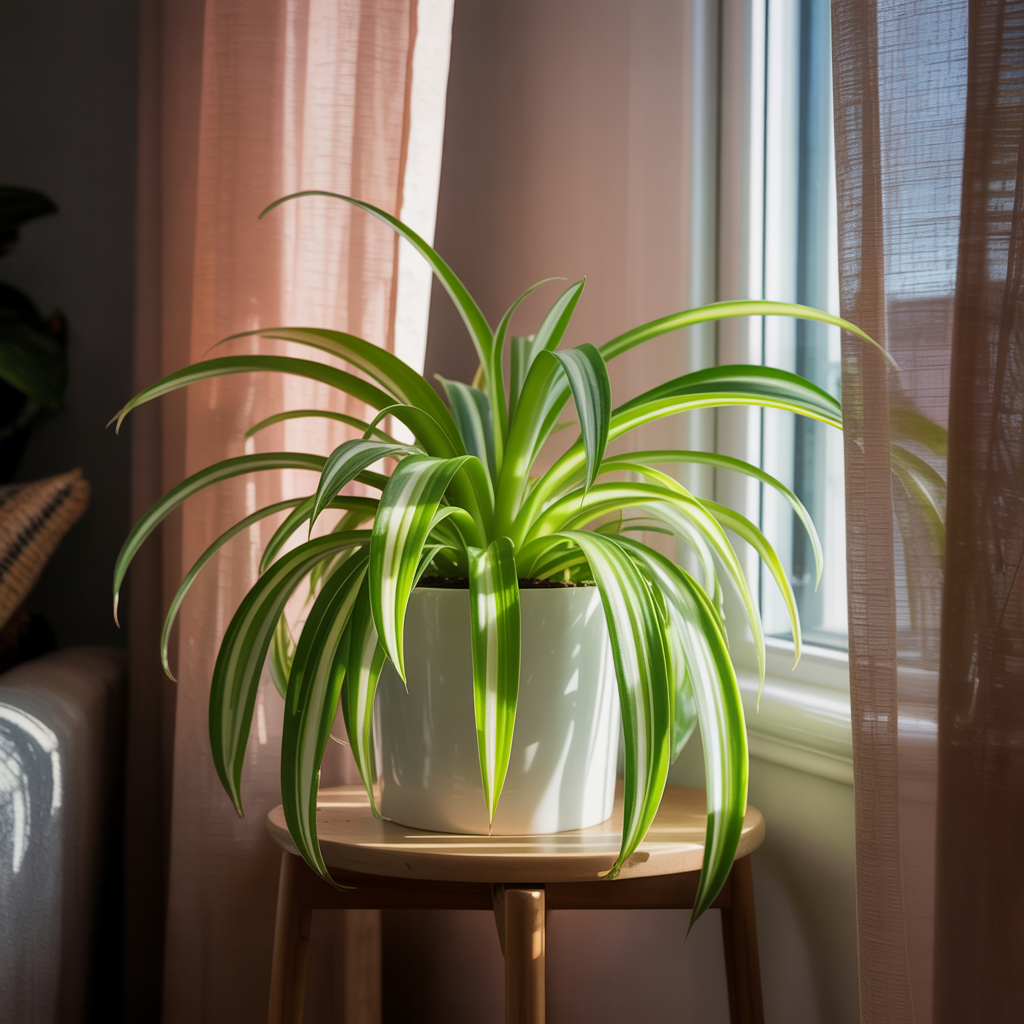
A practical approach begins with identifying the brightest stable area in your home. The plant should receive indirect light for several hours each day without exposure to harsh sunlight.
Observing how the soil dries and how new leaves develop provides feedback on whether the placement is effective. Small adjustments can then be made based on these observations.
For a broader understanding of how placement interacts with watering and soil, see complete indoor plant care guide for beginners.
Frequently Asked Questions
How close should a spider plant be to a window?
A distance of approximately half a meter to one and a half meters from a bright window typically provides effective indirect light.
Can spider plants grow under artificial light?
Artificial light can support growth, but natural light is generally more consistent and effective.
Why does my spider plant grow slowly near a window?
Light intensity may still be insufficient depending on window direction, time of year, or obstructions.
Should the plant be rotated regularly?
Occasional rotation helps maintain even growth, but frequent movement is unnecessary.
Does placement affect spiderette production?
Yes, consistent light and stable conditions often encourage the plant to produce more spiderettes.
Final Thoughts
Placement is not a minor detail in spider plant care. It defines how much energy the plant can generate and how effectively it can grow over time.
When light, airflow, and environmental stability align, the plant naturally shifts from maintaining its current state to producing new growth. This transition does not require drastic changes, but it does depend on consistent conditions.
A well-chosen location allows the plant to develop steadily, making growth easier to observe and more reliable over time.