15 Small Balcony Garden Layout Ideas That Actually Work
Small balcony garden layout ideas that actually work can transform even the most limited space into something functional and enjoyable. Have you ever filled your balcony with plants, only to feel like it looks crowded and still does not grow well?
Many setups fail because they focus on adding more plants instead of arranging them in a way that supports light, airflow, and access. After struggling with cramped layouts that looked good at first but became difficult to maintain, a more structured approach made a noticeable difference in both plant health and usability.
This guide explains how to design a balcony garden that works in real conditions. You will learn how to analyze your space, choose the right layout, avoid common mistakes, and build a setup that stays effective over time.
What Makes a Balcony Garden Layout Actually Work
A balcony garden works when it supports both the plants and the person caring for them. A layout that looks full but blocks light or restricts movement quickly becomes difficult to manage.
Light distribution is one of the most important factors. Plants placed in the wrong positions often compete for light, which leads to uneven growth and weak structure. A good layout ensures that each plant receives enough exposure without being shaded by others.
Airflow also plays a critical role. When plants are packed too closely together, moisture stays trapped, and leaves remain damp for longer periods. This can lead to slow growth and increased maintenance.
Access is another factor that is often overlooked. If watering and trimming require moving multiple pots every time, the system becomes inefficient. A functional layout allows easy access to each plant without constant rearranging.
Weight and drainage should also be considered. Balconies have limits, and water needs to flow out properly. A well-designed layout takes these practical constraints into account from the beginning.
How to Analyze Your Balcony Before Designing
Before choosing a layout, it is important to understand how your balcony actually behaves throughout the day.
Start by observing sunlight patterns. Notice where light falls in the morning, afternoon, and evening. Some areas may receive strong light, while others remain shaded. These zones will determine where different types of plants should go.
The shape of the balcony also affects layout choices. A long and narrow balcony requires a different approach than a square or corner space. Identifying usable walls, railings, and floor space helps define the structure of the design.
Air movement should also be observed. Balconies that face open areas often experience stronger airflow, while enclosed balconies may retain more humidity. This influences how quickly soil dries and how plants respond to watering.
Drainage is another key detail. Water should be able to flow away easily without pooling. If certain areas retain water, plant placement should be adjusted accordingly.
Understanding these factors allows you to choose a layout that fits your specific space instead of copying a design that may not work in your conditions.
Small Balcony Garden Layout Ideas That Actually Work
1. Vertical Wall Garden Layout
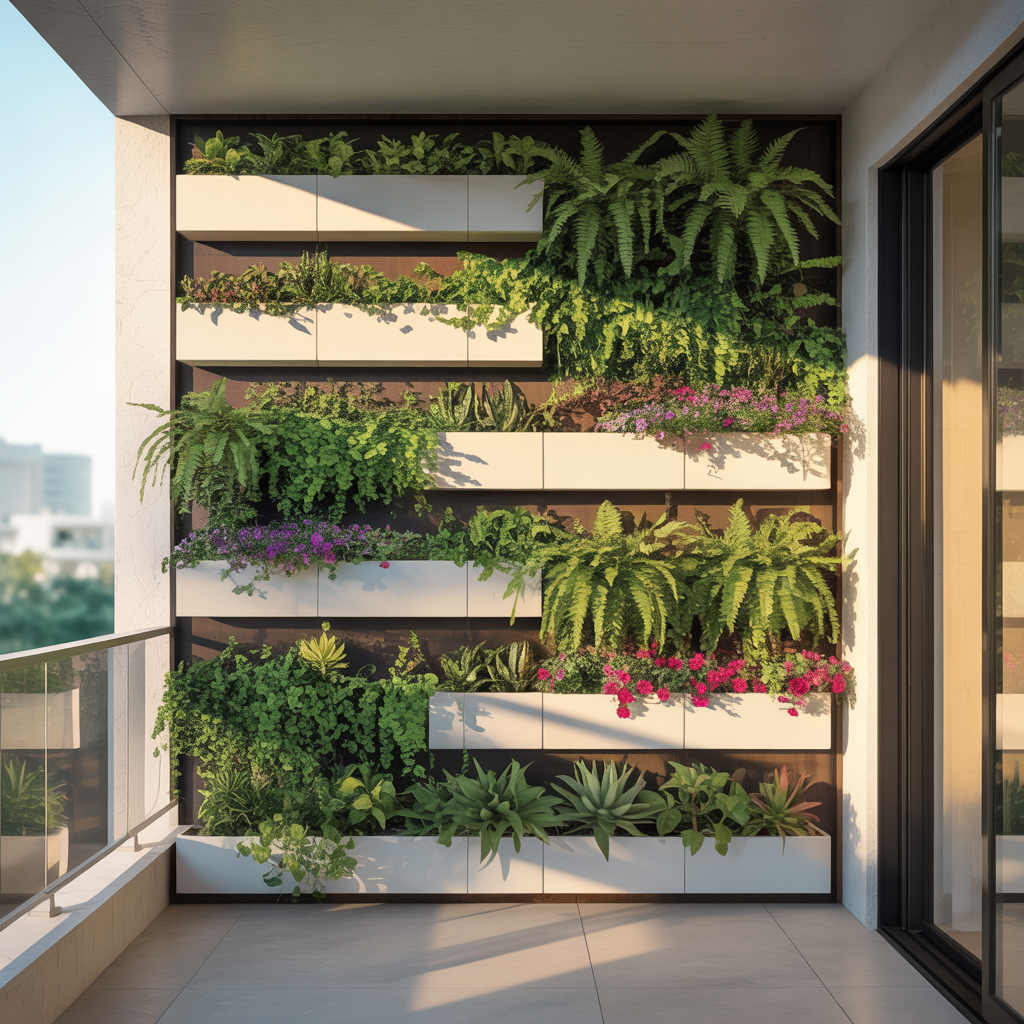
A vertical wall layout uses wall space instead of floor space, which makes it ideal for very small balconies.
Plants are arranged in stacked layers using shelves, mounted planters, or vertical frames. This keeps the walking area clear while maximizing the number of plants that can be grown.
This layout works best when the wall receives consistent light. If the wall is in deep shade, plant selection should be adjusted to match lower light conditions.
One common mistake is placing too many layers too close together. Proper spacing between rows ensures that each plant receives enough light and airflow.
2. Railing Planter Layout
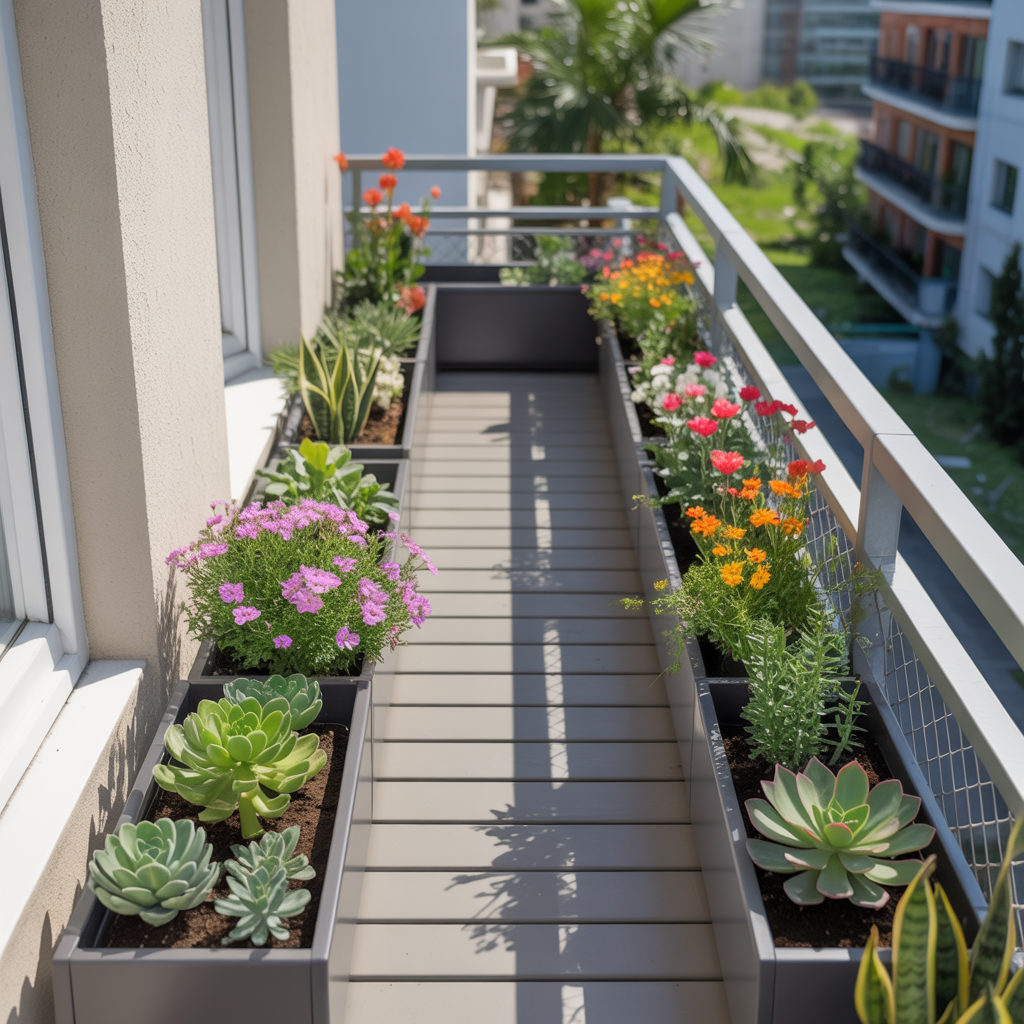
Railing planters take advantage of the outer edge of the balcony, which is often underused.
By placing plants along the railing, the central area remains open and accessible. This layout is especially effective for narrow balconies where floor space is limited.
Plants positioned here often receive better light exposure because they are closer to the open edge. This supports stronger growth compared to plants placed deeper inside the balcony.
Care should be taken to ensure secure placement and proper drainage to avoid water dripping issues.
3. Corner Layered Layout
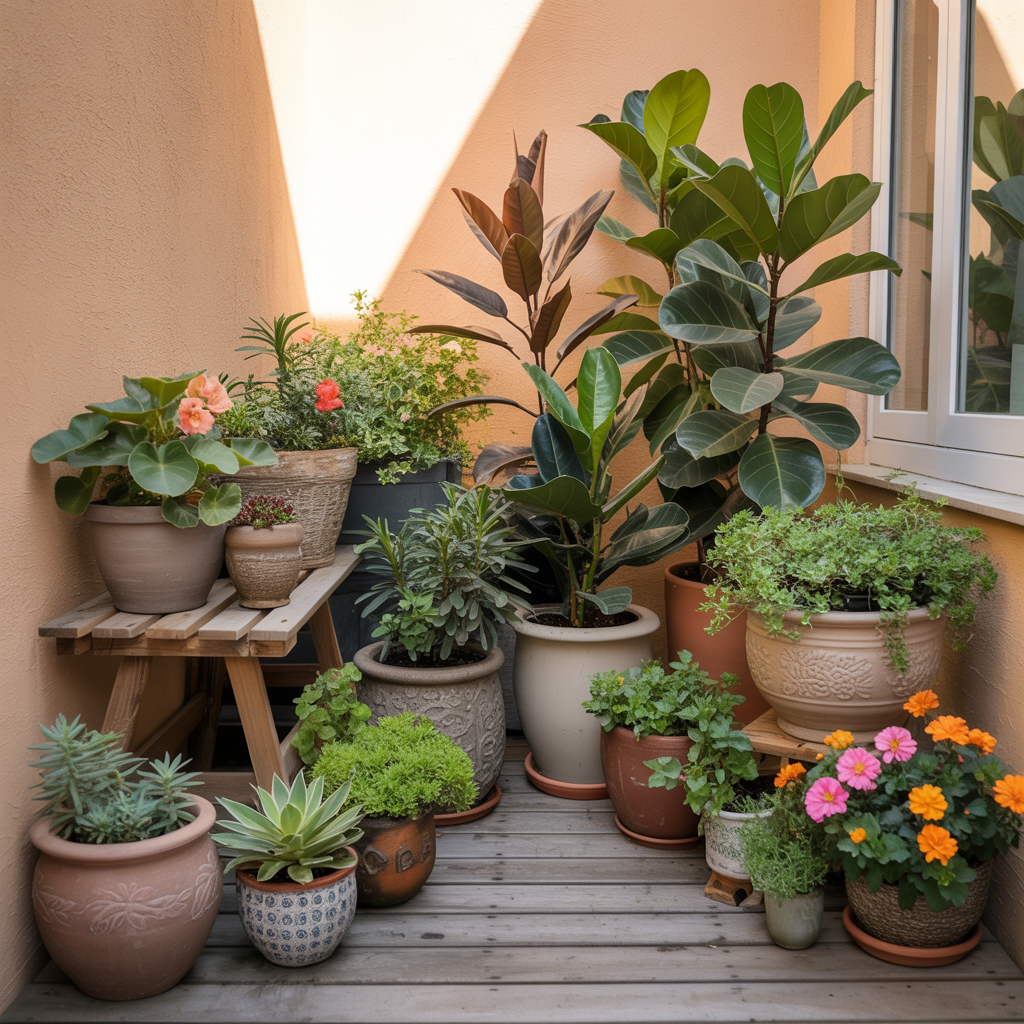
A corner layout groups plants in one area instead of spreading them across the entire balcony.
Larger pots are placed at the back, with smaller plants arranged in front or on elevated stands. This creates depth without overcrowding the entire space.
This approach works well for balconies that have one strong light source. By concentrating plants in that zone, growth becomes more consistent.
It also simplifies maintenance because most of the plants are in one accessible area.
4. Hanging and Floor Combination Layout
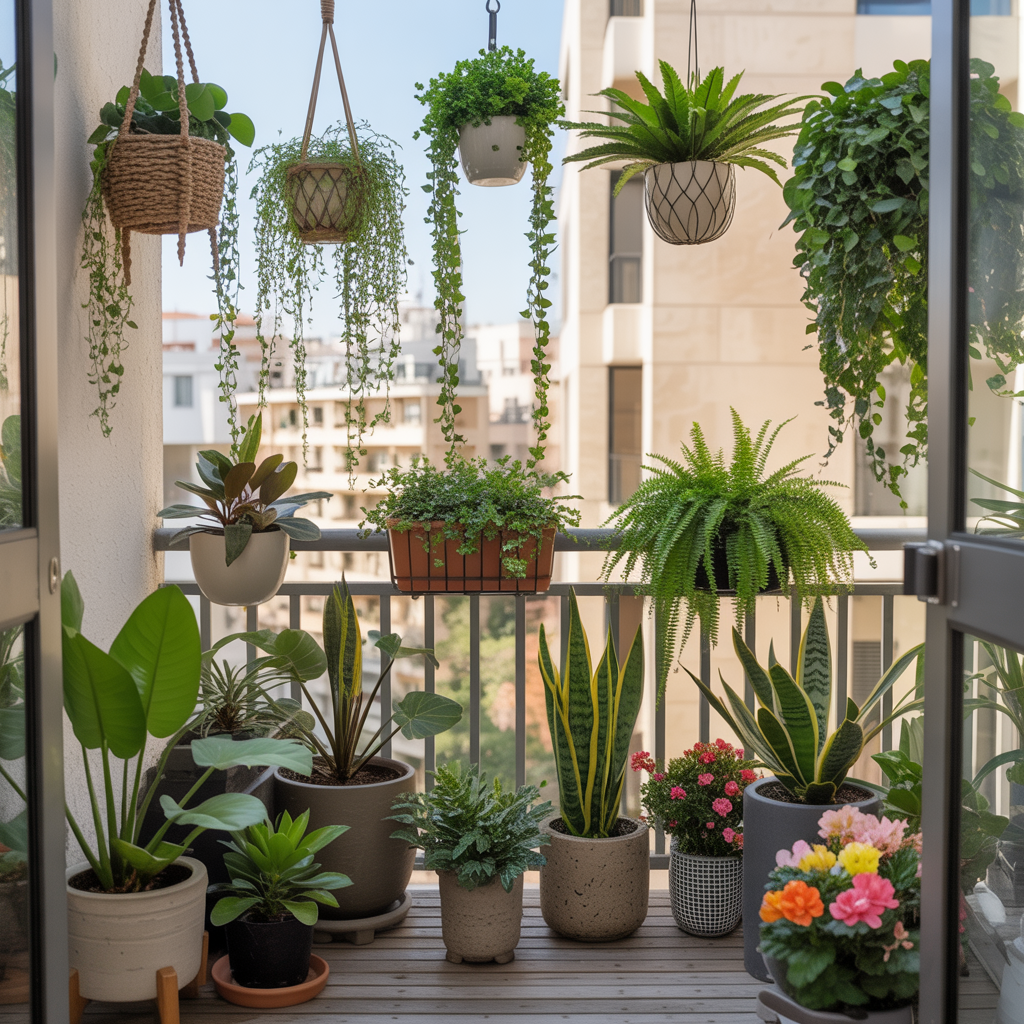
Combining hanging plants with floor pots allows better use of vertical space without relying entirely on walls.
Hanging plants receive light from above and sides, while floor plants occupy the lower level. This creates a layered effect that improves both light distribution and visual balance.
This layout is particularly effective for plants that naturally grow downward or outward, such as trailing species.
Spacing should still be maintained to prevent overcrowding and ensure airflow between levels.
5. Minimalist Grid Layout
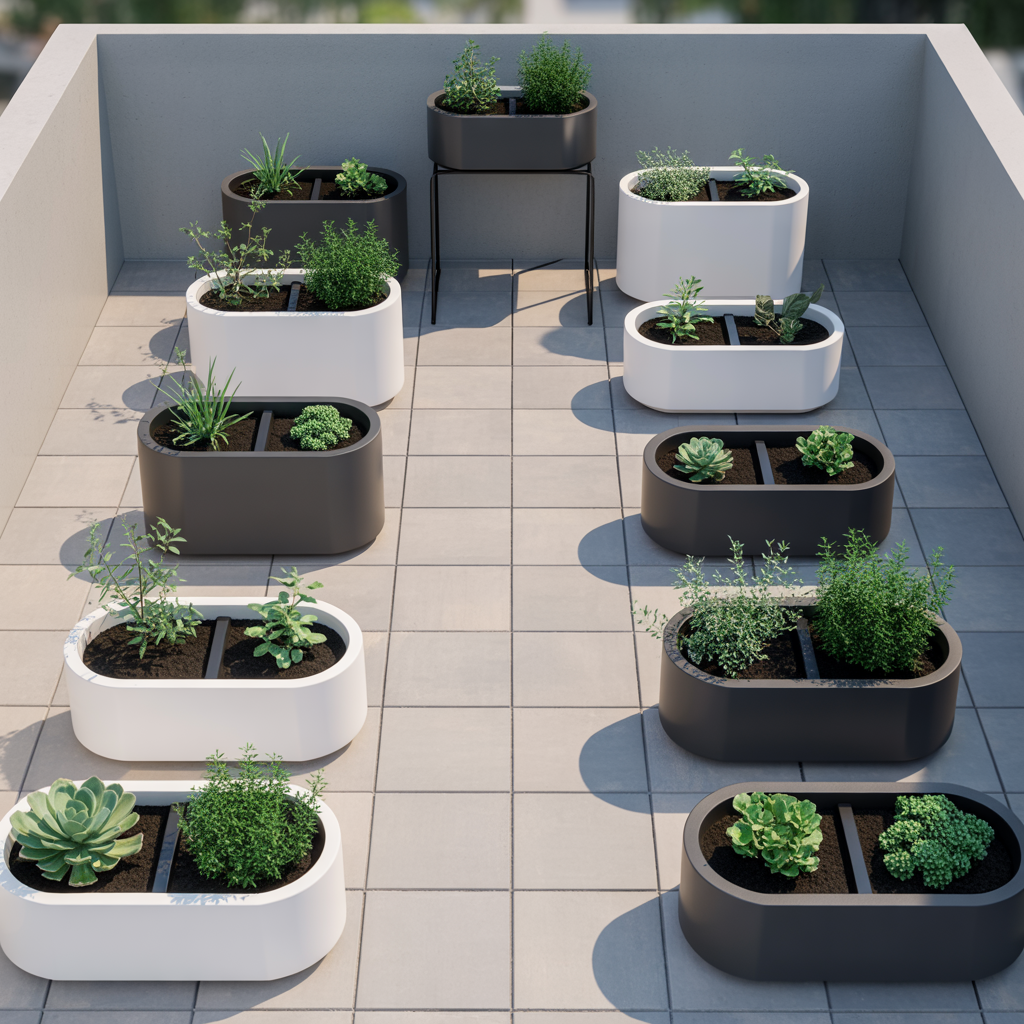
A minimalist grid layout focuses on fewer plants arranged with clear spacing.
Instead of filling every available area, plants are placed in an organized pattern that allows each one to receive adequate light and airflow.
This layout reduces maintenance and makes watering more efficient. It is also easier to adjust over time as plants grow.
It works well for beginners or anyone who prefers a clean, structured look.
6. Functional Edible Garden Layout
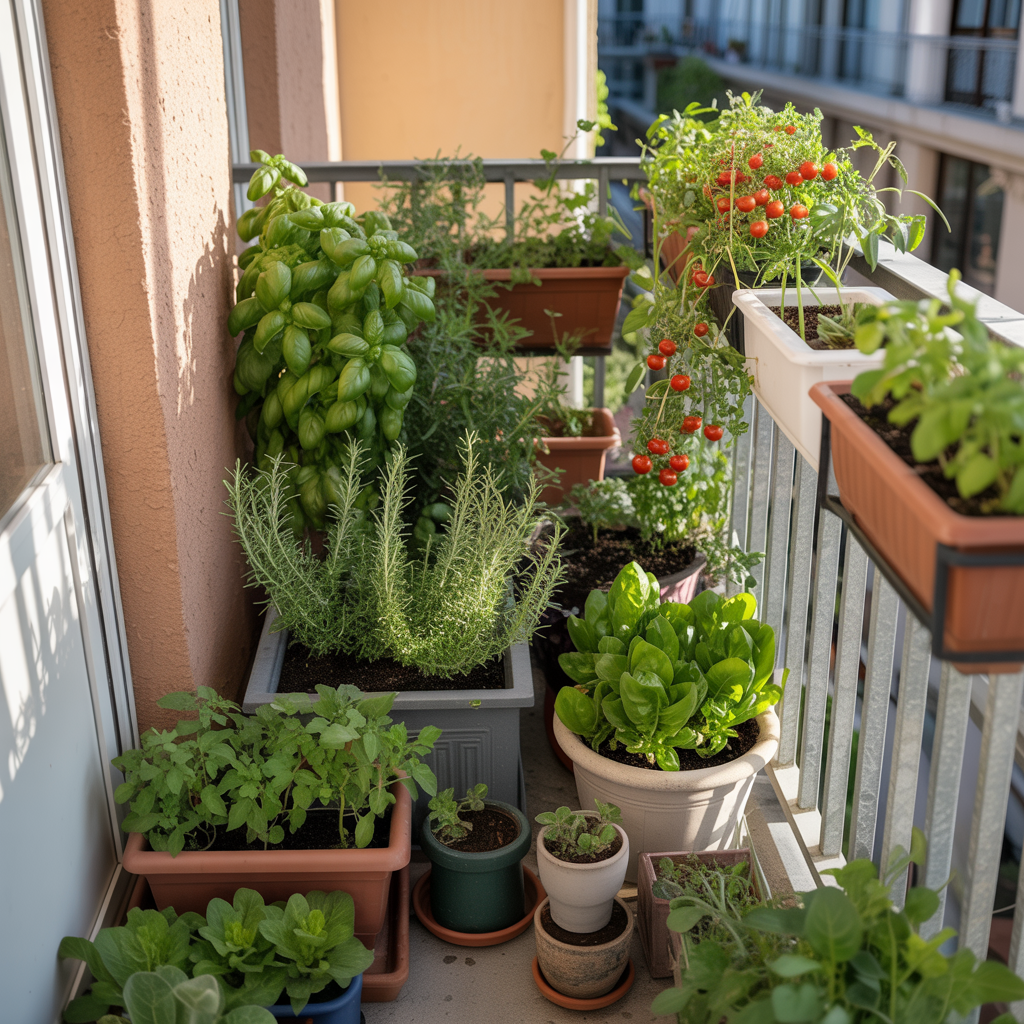
An edible garden layout prioritizes productivity over decoration.
Plants are arranged based on their light requirements, with sun-loving herbs and vegetables placed in the brightest areas. Less demanding plants are positioned in partially shaded zones.
This layout often uses a combination of railing planters, vertical supports, and floor pots to maximize output.
For more detailed plant-specific setups, see herb garden ideas that fit small spaces, which expands on how to organize edible plants effectively.
7. Multi-Zone Balcony Layout (Light-Based Zoning)
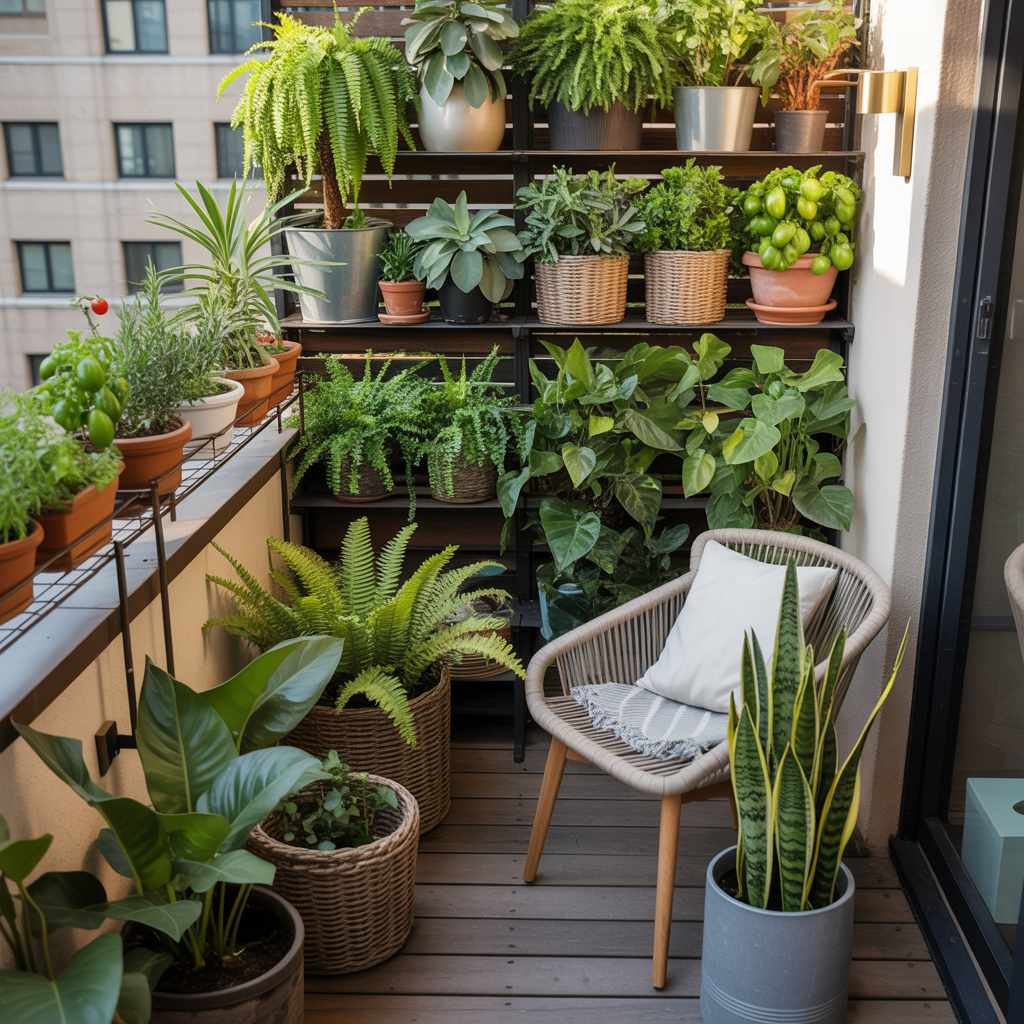
Instead of placing plants randomly, this layout divides the balcony into zones based on how light changes throughout the day.
The brightest area is used for sun-loving plants such as herbs or vegetables. Slightly shaded areas are reserved for foliage plants, while the darkest corner holds the most tolerant species.
This approach works especially well when your balcony has uneven sunlight. It allows each plant to grow in the conditions it actually needs instead of forcing everything into one setup.
8. Sliding Shelf Layout (Flexible Space Design)
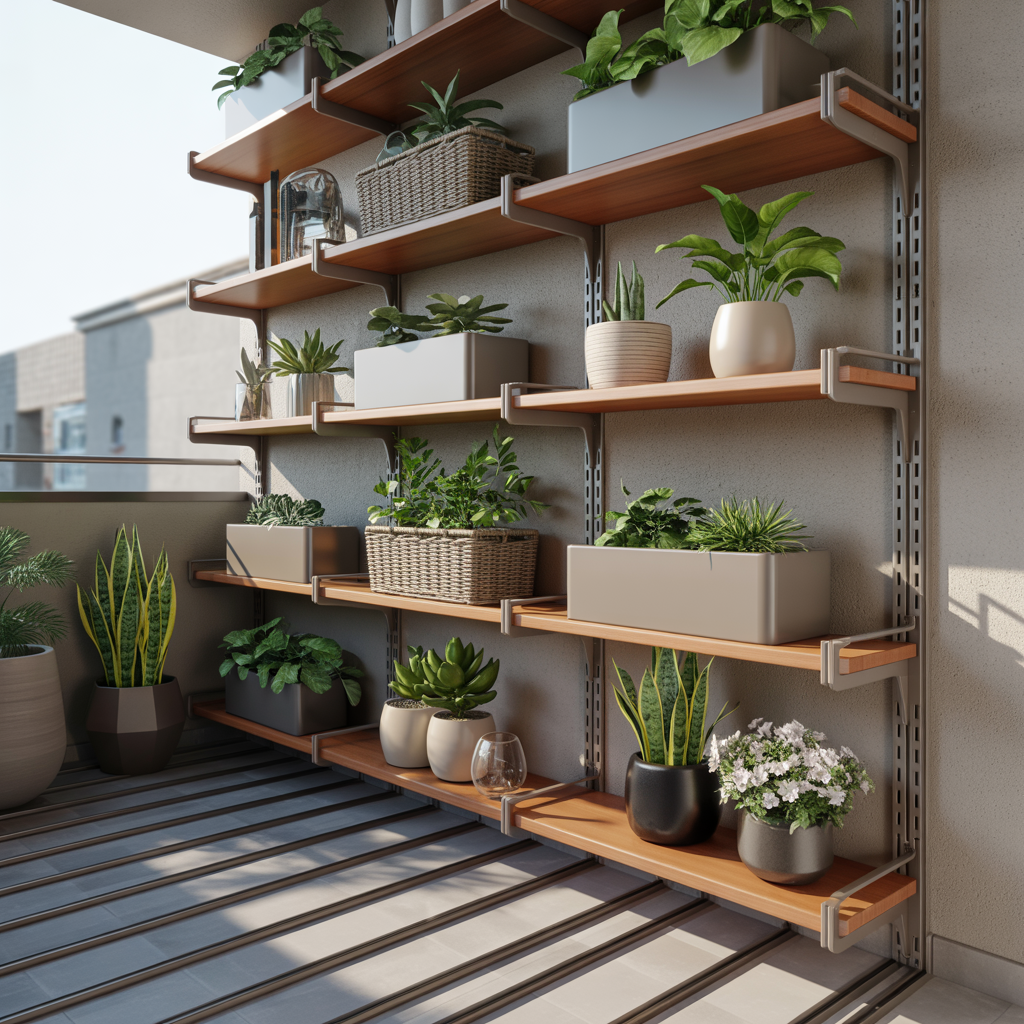
A sliding or movable shelf system allows the layout to adapt over time.
Shelves can be repositioned depending on season, plant size, or light direction. During brighter months, plants can be spread out, while in lower light conditions, they can be grouped closer to the light source.
This layout is ideal for people who want flexibility without constantly redesigning the entire space.
9. Layered Back-to-Front Depth Layout
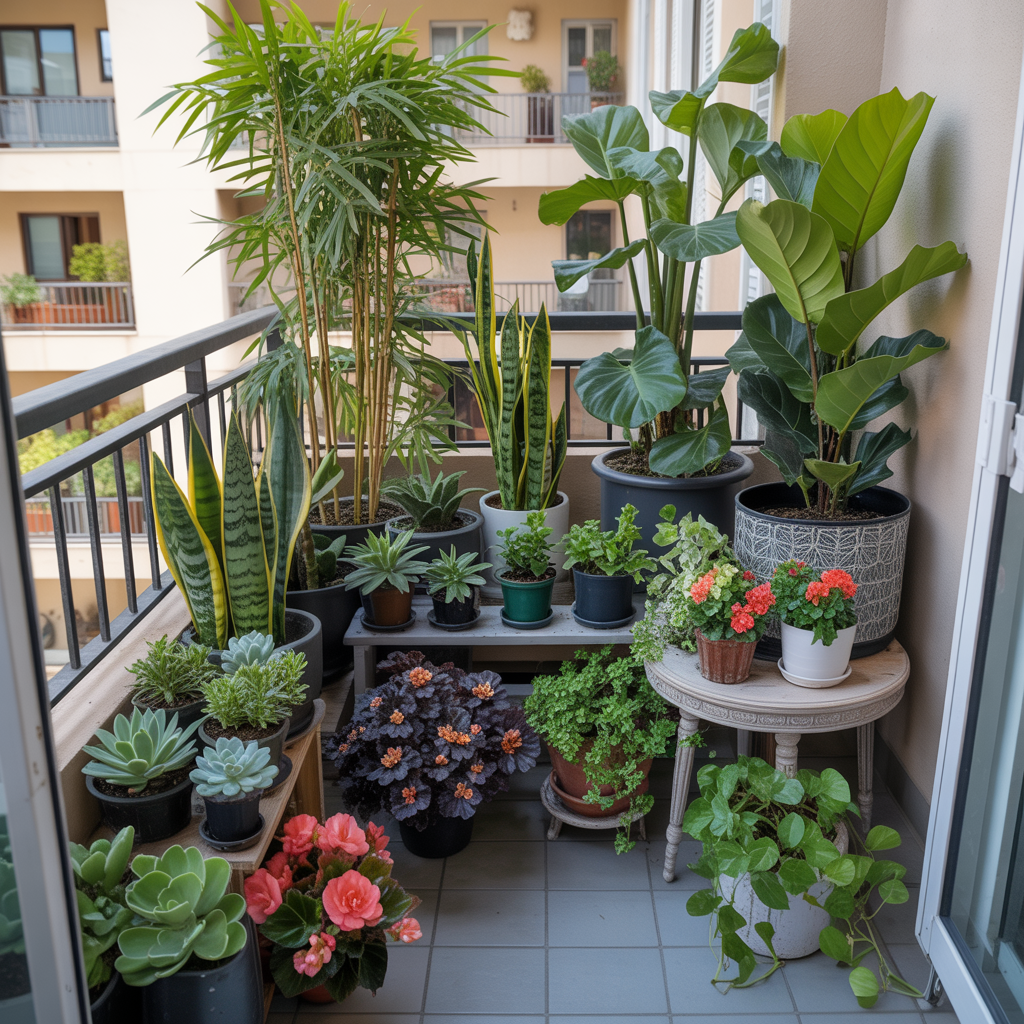
This layout uses depth instead of height as the main design principle.
Larger plants are placed at the back near the wall, medium plants sit in the middle, and smaller plants are positioned closer to the edge. The arrangement creates a natural flow that improves both light exposure and visibility.
Unlike random placement, this structure ensures that each plant receives light without being blocked by taller ones.
10. Compact U-Shape Layout (Maximize Edges, Free the Center)
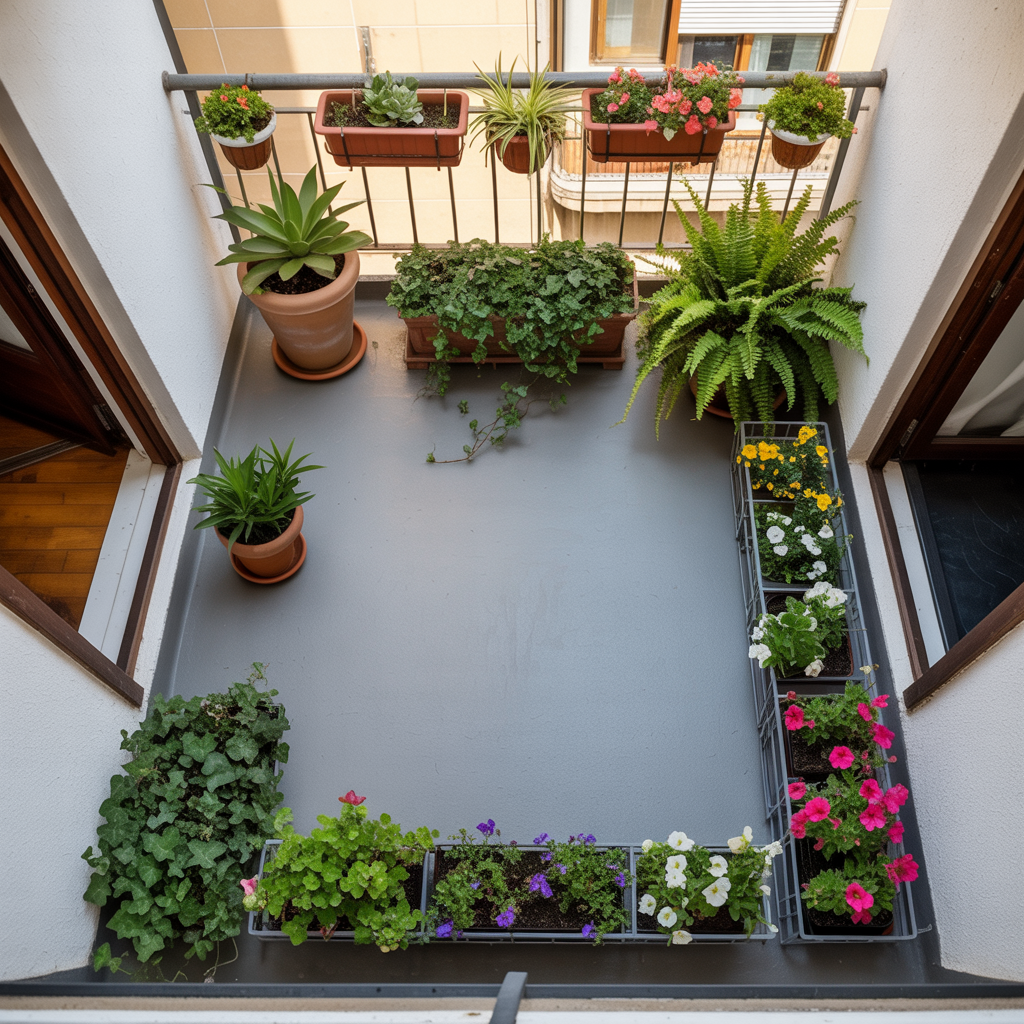
A U-shaped layout places plants along three sides of the balcony, leaving the center open.
This design creates a defined walking space while still maximizing planting area. It works particularly well for balconies that are slightly wider than average.
The open center makes watering and maintenance easier, which helps keep the garden consistent over time.
11. Rail + Wall Hybrid Layout (Double-Layer Efficiency)
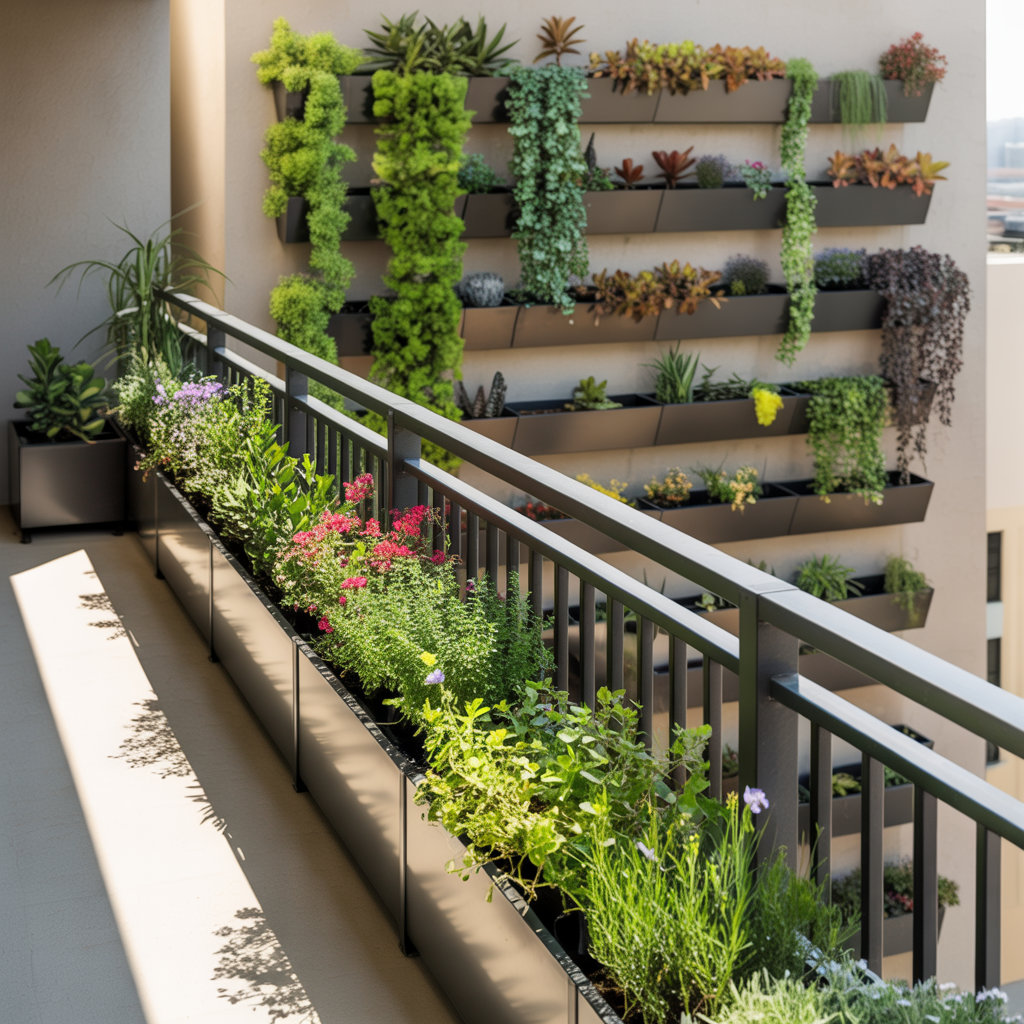
This layout combines railing planters with vertical wall elements.
Plants are placed along the railing for maximum light exposure, while additional plants are mounted on the wall behind them. This creates two functional layers without overcrowding the floor.
It is one of the most efficient layouts for increasing plant capacity while maintaining structure and airflow.
12. Micro Greenhouse Balcony Layout
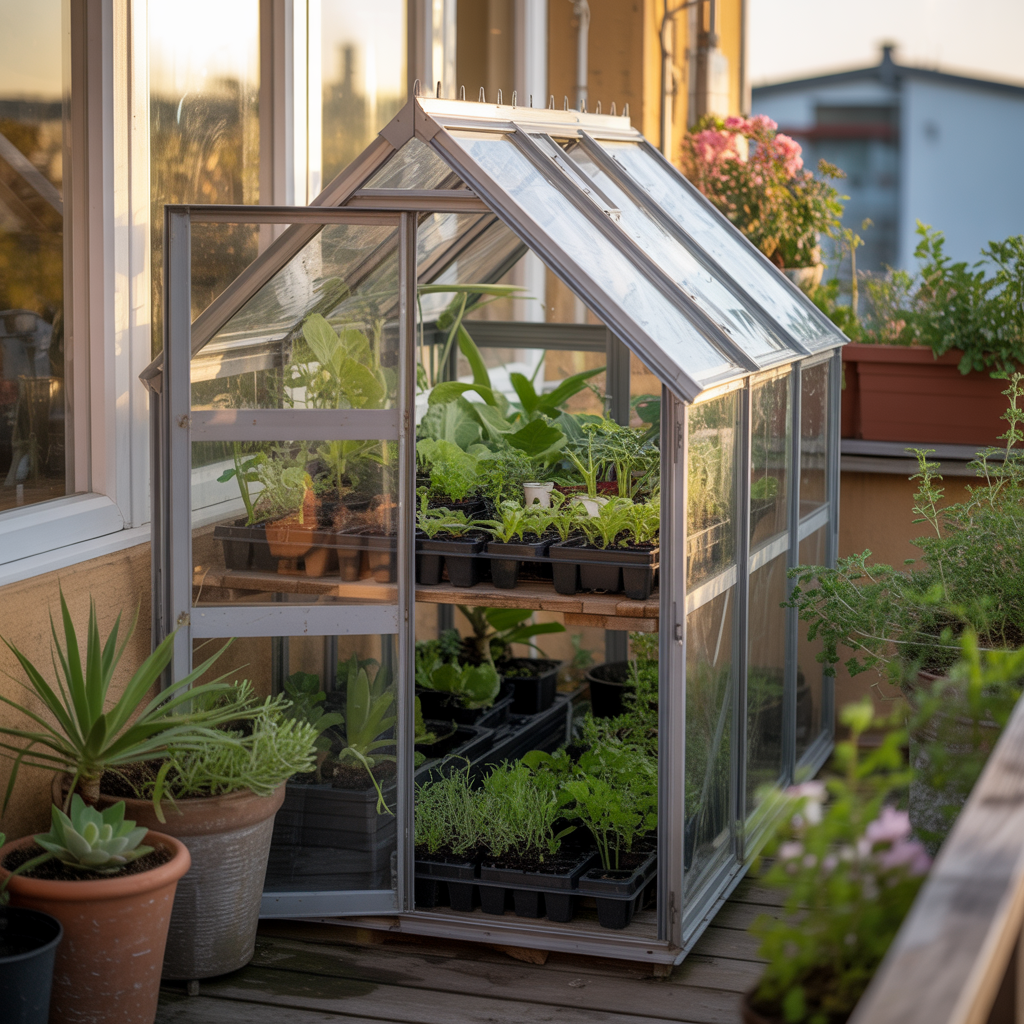
A small enclosed section of the balcony can be used as a controlled environment.
Using transparent covers or compact greenhouse shelves allows you to maintain higher humidity and stable conditions for sensitive plants.
This layout works well for propagation, seedlings, or plants that struggle in open-air conditions.
13. Rotational Layout (Seasonal Adjustment Design)
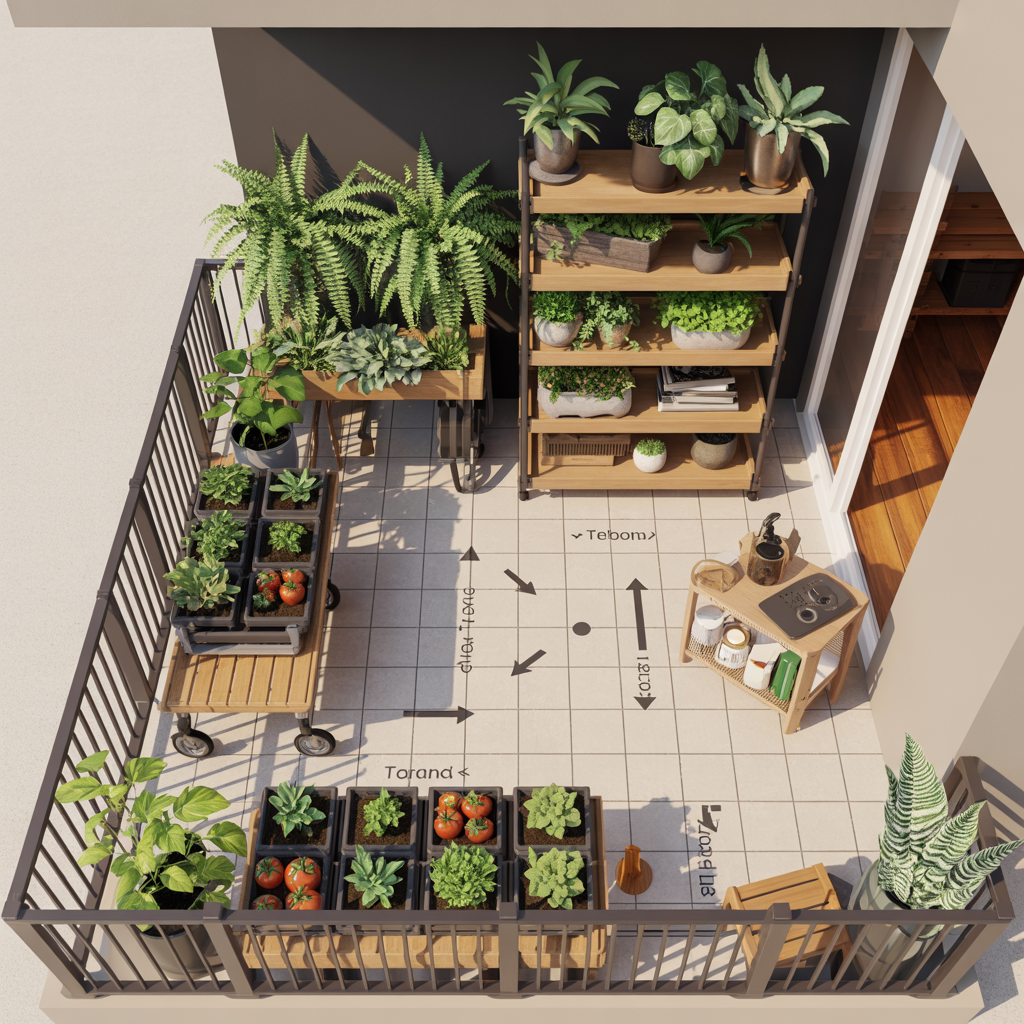
Instead of fixing plants in one position permanently, this layout is designed to change with the seasons.
Plants are rotated between high-light and moderate-light areas depending on the time of year. This prevents long periods of slow growth during seasonal changes.
This approach is especially useful in climates where daylight hours vary significantly.
14. Minimal Floor + Floating Layout
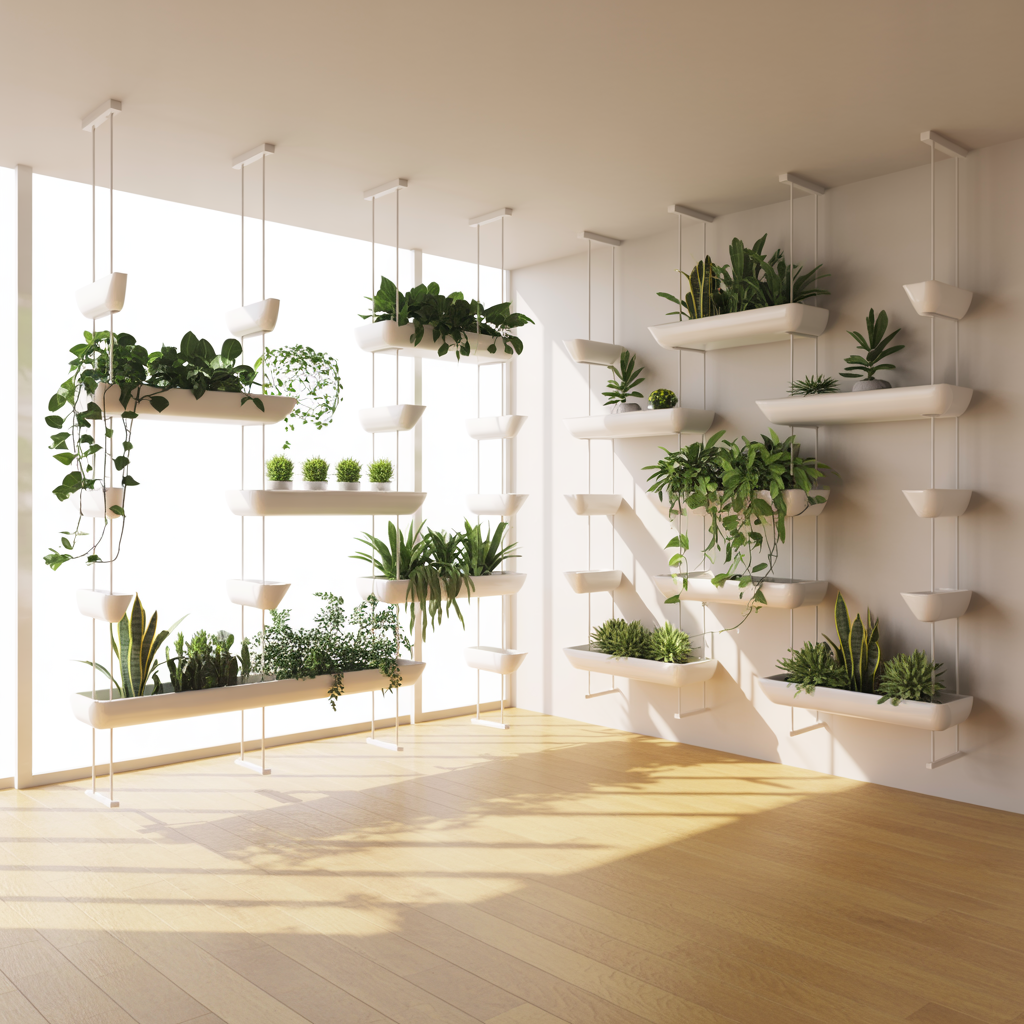
This layout reduces floor usage to almost zero.
Most plants are placed on hanging systems, wall-mounted racks, or suspended shelves. The floor remains mostly clear, which makes the space feel larger and easier to use.
It works best in very small balconies where floor space is limited but vertical space is available.
15. Functional + Relaxation Combo Layout
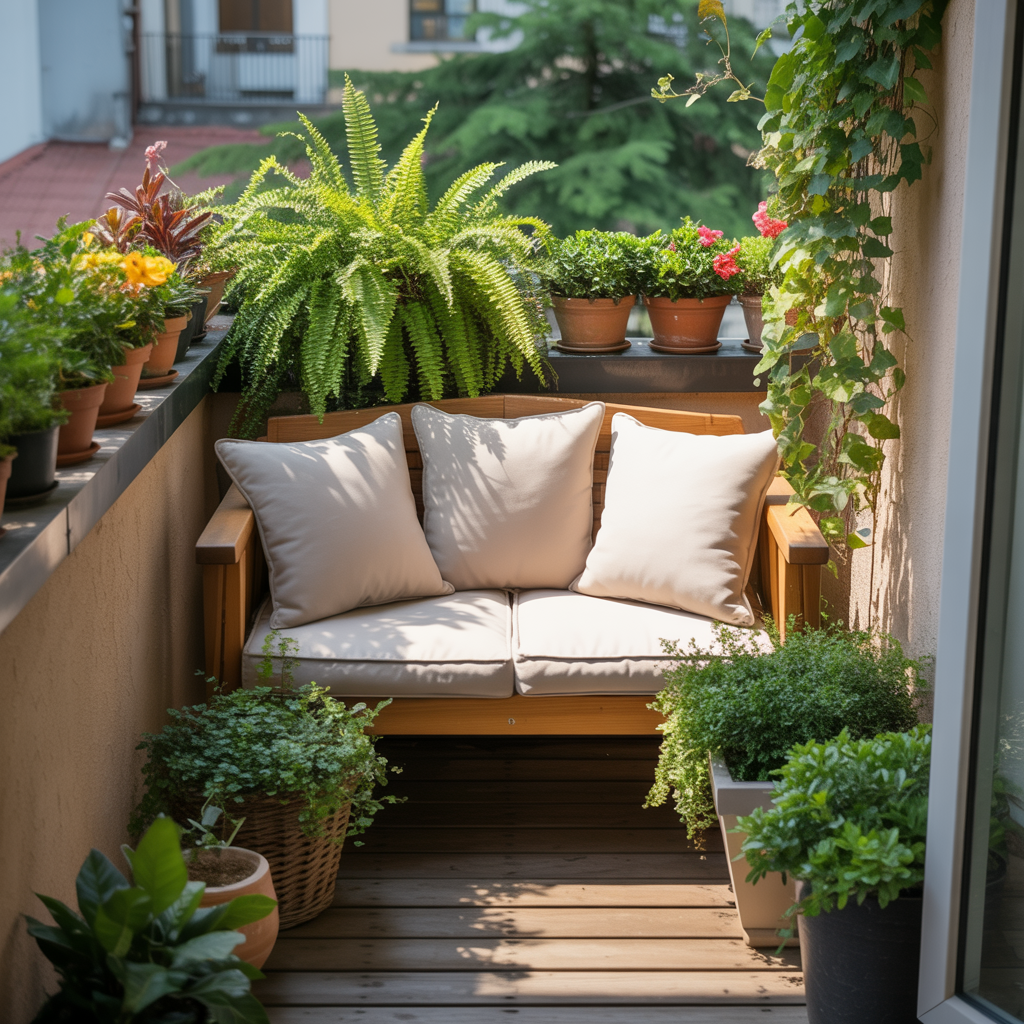
This layout combines a small seating area with a structured plant arrangement.
Plants are placed along edges and corners, leaving space for a chair or bench. The result is a balcony that functions both as a garden and a living space.
This design increases usability without sacrificing plant growth.
Common Balcony Garden Layout Mistakes
Overcrowding is one of the most frequent issues. Adding too many plants reduces light availability and limits airflow, which affects growth over time.
Blocking light sources is another common mistake. Tall plants placed in front of smaller ones can create unnecessary shading, which leads to uneven development.
Ignoring drainage can also cause long-term problems. Water that does not flow properly can damage roots and create maintenance challenges.
Mixing plants with very different needs in the same area often leads to inconsistent care. Grouping plants with similar requirements simplifies maintenance and improves results.
Finally, a layout that does not allow easy access often becomes difficult to maintain. When basic tasks require constant rearranging, the system becomes inefficient.
How to Choose the Right Layout for Your Space
Choosing the right layout depends on how your balcony is structured and how you plan to use it.
For very small balconies, vertical and railing layouts provide the best use of limited space. These designs keep the floor clear while still allowing for plant growth.
For long and narrow balconies, railing layouts combined with a small corner grouping create balance without overcrowding.
For balconies with strong sunlight, layered layouts help distribute light more effectively and prevent excessive exposure in one area.
Understanding your space allows you to select a layout that supports both plant health and usability.
Step-by-Step Plan to Set Up Your Balcony Garden
Start by clearing the space completely. This makes it easier to see how light moves and where plants should be placed.
Identify the brightest areas and mark zones based on light intensity. This helps determine which plants belong in each section.
Choose a layout that matches your balcony size and shape. Avoid combining too many styles at once.
Place larger items first, such as pots, shelves, or stands. This creates the structure of the layout.
Fill remaining spaces with smaller plants while maintaining proper spacing. Test the layout for a few days and adjust as needed before finalizing.
How to Keep the Layout Working Long-Term
A layout should evolve as plants grow.
Regular pruning helps prevent overcrowding and maintains airflow. Rotating plants occasionally ensures even light exposure.
Seasonal adjustments may also be necessary. Light patterns change throughout the year, so repositioning plants slightly can help maintain consistent growth.
Monitoring how water moves through the setup helps prevent drainage issues and supports root health.
Frequently Asked Questions
How many plants can fit on a small balcony?
The number depends on layout and spacing, but fewer well-placed plants usually perform better than overcrowded setups.
Can a balcony garden be too crowded?
Yes, overcrowding reduces light and airflow, which limits growth.
What is the easiest layout for beginners?
A minimalist grid or corner layout is often the easiest to manage.
How do I arrange plants for sunlight?
Place sun-loving plants in the brightest areas and shade-tolerant plants in less exposed zones.
Do I need a vertical garden for small spaces?
Not always, but vertical elements help maximize limited space effectively.
Final Thoughts
A small balcony can become a highly functional garden when the layout supports how plants actually grow.
The key is not adding more plants, but arranging them in a way that balances light, airflow, and access. Once that balance is achieved, growth becomes more consistent and maintenance becomes easier.
With the right structure in place, even the smallest balcony can support a garden that feels both productive and enjoyable.